
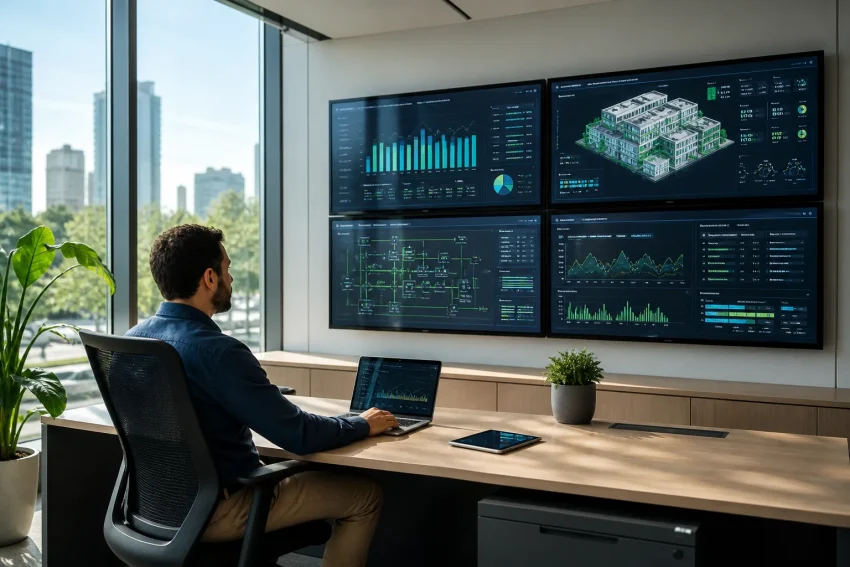
Energy system failures don’t announce themselves with alarms. They creep in quietly through worn bearings, voltage drifts, and thermal stress until a single breakdown costs you thousands in downtime and emergency repairs. AI-driven predictive maintenance flips that script entirely. By analyzing real-time sensor data and learning your system’s normal behavior, it flags anomalies weeks before they escalate into failures.
Lifee has embedded this capability into their AI-powered automation systems, helping businesses and real estate professionals cut unplanned outages while extending equipment lifespan. This guide walks you through deploying predictive maintenance strategically, choosing the right sensors, training models on your data, and building a maintenance workflow that actually prevents costly surprises.
Understanding Predictive Maintenance With AI in Building Energy Systems
Predictive maintenance with AI for building energy systems has quickly become a game changer in 2026. Instead of waiting for something to break or following a fixed maintenance schedule, AI-powered predictive maintenance keeps a constant eye on your building’s vital systems. It analyzes incoming data to spot the earliest hints of trouble, often before anyone notices a thing. This means maintenance teams can address problems before they grow, quietly keeping everything running smoothly behind the scenes.
What Is Predictive Maintenance?
At its core, predictive maintenance is all about using real-time data and smart analytics to figure out when equipment might fail or start to underperform. Think about a busy office building with a sprawling HVAC system. Sensors monitor things like motor vibration, heat, and energy use. If a fan motor begins drawing more power or starts to vibrate in an unusual way, AI can catch that pattern and alert the team before it turns into a costly breakdown. This approach doesn’t just prevent emergencies; it also helps equipment last longer by only servicing it when there’s a real need, reducing unnecessary interventions that can disrupt operations.
Why AI Matters for Building Energy Systems
AI brings a whole new level of insight to building energy systems. These systems constantly produce a flood of data, from temperature sensors to power meters. AI sifts through this data, picking out the subtle signs that would be missed in a routine check. For example, it might spot an inefficient pump or detect when a lighting circuit is pulling extra current. Facility managers then get targeted, actionable alerts, so they can focus on what matters most. This not only boosts reliability but also eliminates the guesswork, making every maintenance decision count and aligning technical choices with comfort, safety, and sustainability objectives.
- Predictive maintenance with AI anticipates failures and inefficiencies long before they impact operations. Instead of reacting to alarms or occupant complaints, your team can plan service windows around business priorities and occupancy patterns. This creates calmer operations, fewer late-night callouts, and a maintenance culture focused on prevention rather than firefighting.
- AI-driven insights lead to targeted, proactive interventions that save time and money. Rather than inspecting every unit on a rigid schedule, technicians concentrate on assets showing early signs of stress. Over a portfolio of buildings, this focused approach frees budget and staff hours that can be reinvested in deeper retrofits, commissioning, or tenant experience projects.
- Lifee’s intelligent automation makes these capabilities accessible beyond large corporate campuses. By packaging predictive analytics, conversational LLM interfaces, and tailored automation playbooks, Lifee helps smaller businesses and residential portfolios adopt the same strategies without needing a large in‑house data science team.
How AI Powers Predictive Maintenance in Building Energy Systems
Bringing predictive maintenance with AI for building energy systems to life depends on a blend of advanced sensors, powerful analytics, and machine learning. Together, these technologies help maintenance teams stay one step ahead and make smarter decisions every day. Recent research on smart buildings shows that AI-driven control and optimization can cut HVAC energy use by around 20 percent on average, with some hybrid approaches reaching savings close to 30 percent, which magnifies the impact of every maintenance decision.
Key Technologies: Sensors, Data, and Machine Learning
Today’s buildings are filled with IoT sensors that monitor everything from equipment temperature and humidity to vibration and electrical load. All this information feeds into a central platform, where AI models learn what “normal” looks like for each asset. For example, if a chiller’s vibration pattern changes even slightly, AI will spot it and flag it for review. This early detection can save thousands by preventing unexpected failures and minimizing downtime, especially for mission‑critical spaces like data centers or healthcare facilities.
Across the broader energy sector, analysts estimate that predictive maintenance solutions for energy systems represented roughly 15 percent of the AI energy efficiency tools market in 2025, with this segment growing at about 24 percent per year. In parallel, the dedicated predictive maintenance for energy AI market is valued at around 8.7 billion US dollars in 2025 and projected to exceed 90 billion US dollars by the mid‑2030s. These growth rates reflect not only interest in the technology, but also clear business cases built on reduced outages, longer asset life, and quantifiable energy savings.
The Role of Predictive Analytics and Explainable AI
Predictive analytics digs deep into both historical records and live data to forecast which components are at risk. The best platforms now feature explainable AI, which means every alert comes with a clear explanation, showing exactly which sensor readings or trends triggered the recommendation. This transparency builds trust, especially in high‑stakes environments like hospitals or large office complexes where reliability is critical and operational teams need to justify interventions to finance, compliance, and tenant stakeholders.
For smart buildings, industry surveys in 2025 show that about half of organizations exploring AI for their facilities list predictive maintenance and fault detection among their top planned use cases, alongside energy optimization and security. Yet adoption remains modest in many portfolios, largely due to concerns about complexity and integration. Explainable AI helps close this gap by turning opaque scores into understandable narratives: “This air handling unit is likely to fail within three weeks due to rising vibration, anomalous fan power draw, and historical patterns of bearing wear in similar units.”
- AI uncovers early warning signs of wear or abnormal operation, often invisible to the human eye. Subtle shifts in fan power, compressor cycling, or valve positions may look normal on a single day but reveal emerging faults over weeks or months. Machine learning models trained on Lifee’s automation data can spot these patterns and trigger gentle, prioritized recommendations instead of disruptive alarms.
- Explainable AI gives users the confidence to act by making insights clear and accessible. When technicians and asset managers can see the logic behind each alert, they are more likely to trust and act on it. Lifee’s LLM layer further translates complex diagnostics into plain language work orders, so even mixed‑skill teams can understand why a specific asset needs attention now.
- Digital twins and simulation enhance predictive accuracy for complex HVAC systems. Studies of AI‑powered predictive control in digital twin HVAC environments report energy reductions approaching 18 percent compared to baseline rule‑based control, all while keeping thermal comfort within recommended ranges for more than 90 percent of occupied hours. This shows how combining physics‑based models with data‑driven AI can yield robust, real‑world benefits.
Benefits and ROI of AI-Driven Predictive Maintenance
Switching to predictive maintenance with AI for building energy systems pays off in more ways than one. The impact is felt in reduced emergency repairs, greater efficiency, and progress toward sustainability goals. When combined with AI‑based energy optimization, many buildings see combined maintenance and energy cost reductions in the 20 to 30 percent range within the first few years of deployment, making these projects attractive even in tight capital environments.
Cost Savings and Maintenance Optimization
AI helps you catch problems early, cutting down on expensive emergency repairs and preventing chain‑reaction failures. For instance, a university campus in 2026 saw maintenance costs drop by 28 percent after rolling out AI‑powered predictive maintenance. Equipment lasts longer, too, since it is only serviced when truly needed, which avoids both premature replacements and deferred repairs that can snowball into larger failures.
Across energy and infrastructure sectors, recent reports indicate that around 95 percent of organizations that adopt predictive maintenance report positive ROI, with roughly a quarter fully paying back their platform investment within the first year. In practice, this translates into fewer overtime callouts, more predictable maintenance budgets, and lower risk of catastrophic failures that can disrupt operations and damage brand reputation.
Energy Efficiency and Sustainability Impact
Many energy losses in buildings are caused by malfunctioning or poorly tuned equipment. AI spots these issues quickly, whether it is an out‑of‑balance air handler or a pump that is starting to fail. The result is lower energy bills and better system performance. Facilities using these solutions consistently improve their ENERGY STAR ratings and more easily meet new carbon reduction standards, supporting everything from green building certifications to ESG targets.
Meta‑analyses of AI in building energy optimization report average energy savings around 22 percent, with some hybrid approaches achieving nearly 30 percent reductions, especially in HVAC‑dominated buildings. Individual case studies show ranges from about 8 to over 35 percent energy savings, depending on climate, building type, and baseline performance. For a large office or retail portfolio, that can equate to hundreds of thousands of euros in annual savings and significant cuts in CO₂ emissions, especially when combined with low‑carbon energy contracts.
Calculating ROI for Building Owners
Here is how you can measure the return on investment in a way that is meaningful for both financial and sustainability decision makers:
- Reduction in unscheduled downtime and outages. Track the number and duration of unplanned equipment failures before and after deployment. Many portfolios targeting predictive maintenance as a core use case aim for at least a 20 percent reduction in unplanned outages, which directly translates into avoided business disruption for tenants and staff.
- Lower Generally maintenance and energy expenses. Combine maintenance work order costs with utility bills to get a holistic picture of operating expenses. Buildings using AI‑driven predictive maintenance often report up to 30 percent lower maintenance costs and energy efficiency improvements around 15 to 20 percent within the first couple of years, creating a strong total cost of ownership story for investors and lenders.
- Improved comfort ratings from building occupants. Gather occupant feedback through regular surveys or digital engagement tools. As faults are resolved before they are felt, complaints about temperature, air quality, or lighting typically fall, improving satisfaction scores and helping real estate professionals position Lifee‑equipped buildings as premium, comfort‑oriented assets.
- Longer intervals between equipment replacements. Monitor asset lifecycles through your computerized maintenance management system or life‑cycle planning tools. Predictive maintenance extends the useful life of equipment by preventing severe damage, which in turn smooths capital expenditure planning and supports more strategic, low‑carbon retrofits instead of emergency replacements.
On average, buildings using AI‑driven predictive maintenance cut maintenance costs by up to 30 percent and improve energy efficiency by about 15 percent within just a couple of years. When scaled across portfolios, research on AI building controls shows annual onsite energy savings between 8 and 19 percent, with carbon reductions that can reach 40 percent when paired with strong energy policies and low‑carbon supply.
- AI-driven predictive maintenance slashes downtime and repair bills. By predicting failures weeks in advance, facility teams schedule repairs during off‑peak hours, reducing overtime and emergency callouts. Over time, this smoother maintenance profile frees up capital for strategic upgrades such as heat pump retrofits or advanced lighting controls.
- Boosted energy efficiency means lower costs and a greener footprint. As AI continuously fine‑tunes setpoints and identifies energy‑wasting faults, buildings see sustained drops in consumption, not just one‑off gains. This supports corporate sustainability narratives and helps owners comply with tightening regulations on building performance and carbon disclosure.
- Lifee’s contextual automation links maintenance insights directly to everyday operations. When an anomaly is detected, Lifee can not only create a maintenance ticket but also temporarily adjust controls to protect equipment and comfort, ensuring resilience even before technicians arrive on site.
Summary of Key ROI and Savings Metrics
| Metric | Typical Range | Practical Implication |
|---|---|---|
| Maintenance cost reduction | 20% to 30% | Lowers annual operating budgets and frees funds for strategic efficiency projects. |
| Energy savings from AI optimization | 8% to 22% average, up to 30%+ in best cases | Reduces utility bills and supports compliance with energy and carbon regulations. |
| Unplanned outage reduction | 20% to 25% | Improves business continuity and tenant satisfaction through fewer disruptions. |
| Predictive maintenance ROI positivity | 95% of adopters report positive ROI | Demonstrates that most deployments succeed financially when properly scoped. |
| Market growth for predictive maintenance AI | ~24% annual growth in energy systems segment | Signals maturing solutions and expanding vendor ecosystems like Lifee. |
Implementation Framework: Steps and Best Practices
Getting started with predictive maintenance with AI for building energy systems is easier when you follow a clear, step‑by‑step framework. Here is how many facility managers are finding success, especially when working with partners such as Lifee who can bridge technology, design, and day‑to‑day operations.
Assessment and Goal Setting
Start by mapping out all your key systems, including HVAC, lighting, pumps, and major electrical panels. Set specific goals, like lowering unscheduled outages by 20 percent or meeting a targeted energy reduction aligned with local building performance standards. Focus first on systems that have the biggest impact on comfort, operations, or compliance, and document current pain points such as recurring faults, blind spots in monitoring, or high utility bills.
Technology Selection and Integration
Choose AI platforms and sensors that work well with your current Building Energy Management Systems (BEMS) and automation tools. Open standards are important, as they make it much easier to integrate and expand later. Many organizations begin with a pilot project on their most critical system to test out the approach before scaling up. Lifee typically designs these pilots to deliver quick wins, combining intelligent audits, sensor upgrades, and automation workflows that can later be replicated across additional buildings.
Data Strategy and Change Management
A strong data plan is key. Make sure you:
- Standardize sensor data from different sources. Align naming conventions, units, and sampling rates so AI models can compare apples to apples. Lifee’s data engineering layer often includes automated checks that flag inconsistent or missing data, preventing poor inputs from degrading predictions.
- Set up secure data storage, including cloud options for long-term trend analysis. Combining on‑premises systems with secure cloud analytics allows models to learn from years of operation and across portfolios. This is particularly valuable for real estate groups managing dozens of sites with varying ages and technologies.
- Put processes in place to check and clean data as it comes in. Regular data quality routines catch stuck sensors, miscalibrated meters, or communication failures quickly. Clean data improves model accuracy and reduces the risk of nuisance alerts that can erode trust in the system.
Do not overlook the human side. Train your team on the new technology and involve stakeholders early to build buy‑in. Set up regular check‑ins so everyone can share feedback and keep improving the system as you go. Lifee’s LLM interfaces can help here by explaining complex AI outputs in natural language and by serving as a conversational assistant for technicians and managers during the adoption phase.
Ongoing Optimization and Best Practices
Predictive maintenance is not a “set it and forget it” solution. Review your AI‑powered workflows regularly and retrain models as building use or occupancy changes. Listen to your facilities team; they will have valuable insights for adjusting alert thresholds and making recommendations even more relevant. Scheduling quarterly reviews and annual audits helps keep everything on track and ensures your systems stay optimized, especially as regulations evolve and energy prices fluctuate.
- Clear, actionable frameworks make predictive maintenance easier to implement and more effective. A structured roadmap from assessment through rollout keeps projects on time and reduces the risk of scope creep, helping owners maintain confidence in the initiative.
- Best practices include strong data strategies, regular team engagement, and a commitment to ongoing improvement. Continuous learning, both for AI models and human teams, ensures that the system adapts to new equipment, occupancy patterns, and regulatory requirements over time.
- Partnering with specialized providers such as Lifee accelerates deployment and de‑risks innovation. Rather than assembling disparate tools, building owners can rely on Lifee’s end‑to‑end approach, which blends sensor integration, LLM automation, and energy engineering expertise.
Implementation and Performance Comparison
| Aspect | Traditional Reactive/Scheduled Maintenance | AI-Powered Predictive Maintenance with Lifee |
|---|---|---|
| Failure handling | Responds after faults occur, often with urgent callouts and operational disruption. | Identifies anomalies weeks in advance, enabling planned interventions and reduced downtime. |
| Resource use | Technicians follow fixed routes and schedules, inspecting all assets regardless of risk. | Teams focus on high‑risk equipment flagged by AI, using time and budget where it matters most. |
| Energy performance | Efficiency improvements are occasional and largely dependent on manual tuning. | Continuous AI optimization regularly delivers 10 to 20 percent energy savings across HVAC and lighting systems. |
| Data handling | Limited use of historical data; logs are often siloed and rarely analyzed in depth. | Centralized data lake and analytics provide portfolio‑level insights and benchmarking for ongoing improvements. |
| User experience | Maintenance decisions can seem opaque, with little connection to comfort or sustainability narratives. | Explainable AI and LLM interfaces translate technical signals into clear, occupant‑focused stories and sustainability metrics. |
Case Studies: Real-World Applications and Measurable Outcomes
Plenty of organizations are already seeing impressive results from predictive maintenance with AI for building energy systems. Here are a few real‑world examples that show what is possible and how Lifee’s approach fits into broader trends in smart buildings and energy management.
Commercial Office Building: Reducing Downtime and Costs
A 1.2 million square foot office building in a major city deployed AI‑powered predictive maintenance for its HVAC, lighting, and power systems. In just one year, unplanned outages dropped by 25 percent, and total maintenance costs went down by 20 percent. Even better, complaints about uncomfortable temperatures or poor lighting were cut in half, making the building a more pleasant place to work and improving lease renewals and tenant satisfaction scores.
Lifee’s Approach: LLM Automation and Custom Energy Solutions
Lifee takes things further by combining large language model automation with tailored energy management solutions. Their platform gives building managers clear, detailed insights, breaking down diagnostics and offering prioritized action items. By customizing solutions to fit each building’s needs, Lifee helps clients meet evolving regulations and sustainability goals, while delivering real savings on maintenance and energy. For example, in mixed‑use buildings, Lifee can orchestrate different HVAC and lighting strategies for retail, offices, and residential units, all while maintaining portfolio‑level predictive oversight.
Sustainability-Focused Real Estate: Achieving Energy Optimization
A national real estate group used predictive analytics to fine‑tune energy usage across its portfolio of multi‑tenant properties. AI‑driven maintenance targeted HVAC and lighting inefficiencies, leading to a 15 percent cut in Generally energy use. These improvements played a key role in getting green building certifications and attracting tenants who value sustainability, especially institutional clients with strong ESG reporting requirements.
- Real-world results show lower costs, greater reliability, and improved energy performance. Across offices, campuses, and residential portfolios, predictive maintenance consistently delivers fewer failures, smoother budgets, and measurable energy savings.
- Innovators like Lifee are raising the bar for what is possible in smart building management in 2026. By integrating AI, IoT, and human‑centric design, Lifee demonstrates that advanced predictive strategies can be both technically robust and easy for everyday users to adopt.
- Portfolio-level deployment amplifies benefits. When predictive maintenance is rolled out across dozens of buildings, small percentage improvements in each asset accumulate into large, strategic gains in energy, carbon, and financial performance.
Case Study Metrics at a Glance
| Use Case | Key Outcome | Indicative Metrics |
|---|---|---|
| Single large office building | Reduced downtime and maintenance costs | 25% fewer unplanned outages, 20% lower maintenance spend, 50% fewer comfort complaints. |
| University campus | Campus-wide maintenance cost reduction | 28% drop in maintenance costs and extended equipment lifetimes across multiple plant rooms. |
| National real estate portfolio | Energy optimization and sustainability certification | 15% reduction in energy consumption, improved ESG scores, and stronger tenant retention. |
| Lifee-enabled mixed-use buildings | Integrated maintenance and automation | Double-digit energy savings with predictive alerts seamlessly embedded into daily automation workflows. |
Future Outlook: Trends and Innovations in AI-Powered Predictive Maintenance
The future of predictive maintenance with AI for building energy systems is bright and full of new possibilities. As AI models become more powerful and data infrastructure more mature, predictive maintenance will increasingly sit at the center of integrated energy, comfort, and sustainability strategies, rather than acting as a stand‑alone tool.
Explainable AI and Trust in Automation
Building trust in automation is front and center for facility managers. The latest explainable AI tools make it easy for users to see exactly why a recommendation was made, tracing alerts back to the underlying data. This added transparency helps organizations feel confident about letting AI help guide their maintenance strategies and moves AI from experimental pilots into standard operating procedures, especially in regulated sectors like healthcare and education.
Integration with Renewable Energy and Smart Grids
As more buildings add solar panels, battery storage, and connect to smart grids, predictive maintenance is evolving to keep up. AI is now coordinating with these systems to maximize both equipment health and energy efficiency. This integration is really important for creating buildings that are resilient, flexible, and ready for the energy landscape of tomorrow, where peak tariffs, grid constraints, and carbon signals all influence how and when equipment should operate.
- Cutting-edge technology continues to expand the benefits of AI-powered predictive maintenance. Reinforcement learning controllers, hybrid AI methods, and digital twins provide finer‑grained predictions and optimization, pushing savings and reliability further.
- Seamless connections with renewables and smart grids are becoming the standard for energy-smart buildings. Predictive maintenance ensures that inverters, batteries, and smart meters remain healthy, so buildings can reliably participate in demand response and grid services markets.
- Lifee is positioning predictive maintenance as a cornerstone of future-ready home and building automation. By aligning AI maintenance insights with occupant‑centric automation and renewable integration, Lifee helps its clients move from isolated upgrades to comprehensive, long‑term energy strategies.
Strategic Angles Often Overlooked in Predictive Maintenance Projects
Beyond technology and immediate cost savings, several strategic dimensions can determine whether predictive maintenance delivers lasting value. Addressing these aspects early helps building owners, individuals, and real estate professionals embed AI‑driven maintenance into broader energy and asset strategies.
Aligning Predictive Maintenance with Regulatory and ESG Requirements
Regulatory frameworks in 2026 increasingly link building performance to carbon reporting, minimum efficiency standards, and disclosure obligations for large portfolios. By documenting avoided failures, energy savings, and carbon reductions, predictive maintenance programs can feed directly into ESG metrics and compliance reports, turning operational data into strategic evidence. Lifee’s intelligent reporting tools help translate technical logs into regulator‑ready dashboards for owners and asset managers.
Designing Human-Centric Workflows Around AI Insights
Even the best models rely on people to act on their recommendations. Successful projects therefore design workflows where technicians, energy managers, and asset owners all understand their role in the predictive loop. Lifee’s LLM automation supports this by turning complex alerts into natural language tasks, suggesting step‑by‑step remediation plans, and integrating with existing ticketing systems so teams are never forced to reinvent their processes.
Extending Predictive Maintenance to Residential and Small Commercial Buildings
Historically, predictive maintenance focused on large, complex facilities, but affordable sensors, cloud analytics, and LLM‑driven interfaces now make it practical for smaller sites. Lifee’s home and small business solutions can monitor heat pumps, electric water heaters, and solar inverters, predicting issues that could drive up energy bills or cause comfort problems. This brings the benefits of predictive strategies to individual homeowners and small landlords who might otherwise rely solely on reactive repair visits.
FAQs on AI-Powered Predictive Maintenance for Building Energy Systems
How quickly can a building see benefits after deploying AI predictive maintenance?
Most buildings begin to see practical benefits within the first six to twelve months. Early wins typically include reduced nuisance alarms, clearer visibility into asset health, and a handful of avoided failures that demonstrate the value of the system. Deeper energy savings and lifecycle improvements become more apparent over one to three years as models learn the building’s patterns and maintenance practices adapt.
What kind of data does Lifee need to start predictive maintenance in an existing building?
Lifee usually begins with data from existing BEMS and metering infrastructure, including temperatures, flows, power consumption, and equipment status. Where gaps exist, targeted deployment of additional IoT sensors fills in the picture. The key is to capture enough information on critical assets and spaces to allow models to distinguish normal variation from early signs of trouble, without overwhelming teams with unnecessary instrumentation.
Is AI-based predictive maintenance suitable for older buildings with legacy equipment?
Yes, older buildings can be excellent candidates, as they often suffer from higher failure rates and inefficiencies. While legacy equipment may require creative instrumentation or retrofitted sensors, Lifee’s automation systems are designed to integrate with mixed‑age portfolios. Predictive maintenance in these contexts focuses on maximizing remaining life and avoiding disruptive failures, while informing long‑term retrofit and replacement planning.
Predictive maintenance with AI for building energy systems is transforming how facilities are managed in 2026. Moving from a reactive approach to one that is proactive and data‑driven means fewer costly surprises, longer‑lasting equipment, and real progress toward sustainability. By blending smart automation, intelligent energy audits, and contextual automation, solutions like Lifee help building owners, individuals, and managers take full control of their energy systems while unlocking new value at every step. If you are ready to make your building smarter, more efficient, and future‑proof, now is the perfect time to explore what AI‑powered predictive maintenance and Lifee’s intelligent automation can do for you.