
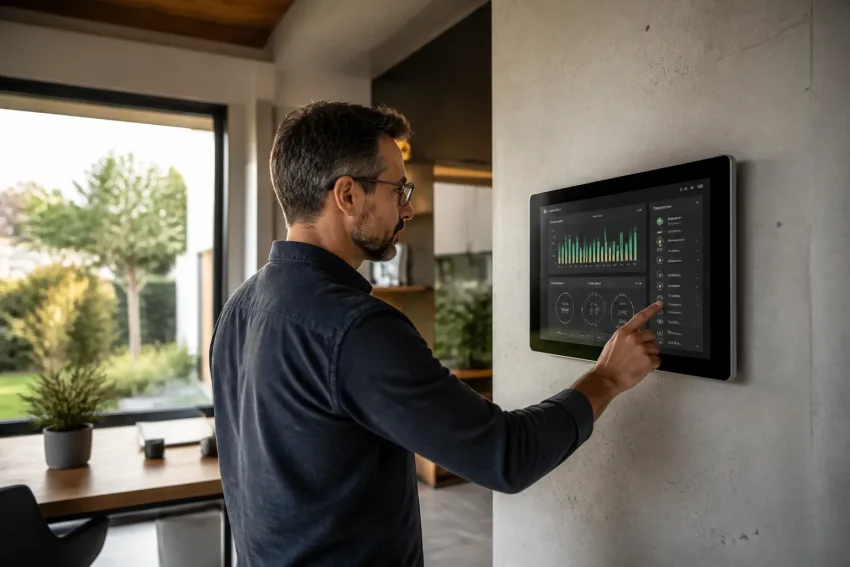
Your home is quietly wasting energy while your phone gets smarter every day. That disconnect is ending faster than most people realize. Artificial intelligence isn’t just powering chatbots anymore, it’s learning your habits, cutting your utility bills, and managing everything from lighting to heating without you lifting a finger.
Lifee has spent years refining AI-powered automation systems that make energy efficiency feel effortless, whether you’re a homeowner tired of surprise bills or a business watching operational costs climb. This guide breaks down exactly how AI works in real-world energy and automation scenarios, what it actually delivers, and why the technology Lastly makes sense for everyday spaces.
Introduction to AI Technology
AI technology refers to systems and machines capable of performing tasks that typically require human intelligence, such as learning, reasoning, and problem-solving. These systems rely on algorithms and data to mimic cognitive functions, enabling them to make decisions, recognize patterns, and adapt over time.
The evolution of artificial intelligence has been marked by significant milestones. Early implementations focused on rule-based systems, which followed strict instructions and performed limited tasks. Advances in computational power and storage enabled the development of machine learning and deep learning models, allowing AI to analyze and interpret vast datasets. By 2026, these advancements have brought AI into mainstream applications, ranging from voice assistants to fully integrated home and industrial automation. Today, AI is found in everything from household appliances to building management systems, seamlessly blending into daily routines.
The relevance of AI in 2026 extends far beyond convenience. Enhanced data processing and automation capabilities have positioned AI as a central component in achieving sustainability, improving efficiency, and providing cost control. In residential and commercial settings, AI-driven solutions help address energy waste, streamline operations, and support eco-friendly practices without adding complexity for the end user.
- AI technology simulates human intelligence to solve complex problems. Modern systems draw on techniques such as machine learning, natural language processing, and computer vision to understand environments, predict outcomes, and recommend or execute actions. In an energy context, this means identifying which equipment is consuming the most power, forecasting demand, and adjusting operations before waste occurs.
- AI is increasingly present in daily life and business operations. From smart speakers and thermostats to industrial energy management platforms, AI quietly orchestrates comfort, security, and efficiency. For Lifee’s customers, this ubiquity translates into ready-made ecosystems that can plug into existing buildings and start optimizing energy flows with minimal disruption.
- AI in energy is now a multi-billion dollar global market. Recent industry analyses estimate that the global AI in energy market moved from roughly 5-6 billion USD in 2025 to around 6-7 billion USD in 2026, with long term growth rates often above 20 percent annually. This surge reflects strong demand for smart grids, intelligent building management, and software like Lifee’s platforms that can turn raw data into measurable savings.
How AI Technology Works: Core Concepts and Mechanisms
At the core of modern AI technology is machine learning, where systems analyze massive amounts of data to recognize patterns and make smart decisions. Think about your home’s thermostat learning that everyone leaves for work by 8 a.m. and returns at 6 p.m. AI can use this data to automatically lower the heating or cooling during the day and have the temperature just right when you walk in. This kind of predictive energy management not only reduces energy waste but also ensures comfort without any manual adjustments.
AI goes beyond simple scheduling. Intelligent automation allows smart systems to respond to real-time information, like adjusting lighting when the sun sets or activating security systems when everyone’s out. In commercial spaces, AI can coordinate heating, ventilation, air conditioning, and lighting so that everything works together efficiently, further reducing unnecessary energy use and creating a comfortable, productive environment for employees and customers.
Think of AI as a home assistant that’s always learning. For example, if you start using a new appliance every morning, the system will notice and can suggest the most energy-efficient way to run it or even automate its operation when energy rates are lowest. Because AI adapts over time, it continues to get smarter, helping both individuals and businesses maximize savings and comfort without any complicated setup or reprogramming.
- Machine learning enables AI technology to get smarter with every interaction. Each adjustment, sensor reading, or user preference becomes training data that refines the model’s understanding of what “optimal” looks like in your particular home or building. Over a few weeks, Lifee’s systems can often move from generic profiles to highly personalized energy strategies that match your rhythm, not a theoretical average.
- Reliable data and context awareness keep AI automation accurate and relevant. Temperature alone rarely tells the whole story; occupancy, tariffs, weather forecasts, and even equipment health influence which decision is best. By fusing these signals, AI can, for instance, delay running a high energy appliance by an hour if a cheaper tariff is coming or if rooftop solar generation is expected to rise.
- Specialized AI energy software is scaling fast. Market research indicates that AI powered energy management software reached around 4.1 billion USD in 2025 and 4.8-5.0 billion USD in 2026, with projections above 11 billion USD by early 2030s. This growth is driven by building owners and facility managers seeking platforms like Lifee’s that consolidate data from meters, sensors, and IoT devices into a single, AI guided control center.
AI Technology in Action: Real-World Applications
AI technology truly shines when you see it in action. In a typical smart home, for example, AI powered home automation can dim lights, lower blinds, and adjust the thermostat, all based on who’s home and what time of day it is. This not only adds a level of convenience that feels almost magical but also helps reduce your energy bills by ensuring nothing is left running unnecessarily.
For businesses, intelligent energy audits powered by AI offer a clear advantage. Think about a retail store using AI to track how much energy each refrigerator or lighting fixture uses throughout the day. The system can spot inefficiencies, like a freezer that’s working too hard, and suggest or even implement fixes. Over time, these small optimizations add up to significant cost savings and a smaller carbon footprint.
Lifee’s solutions make these benefits accessible, no matter your technical know-how. Their custom project design tailors automation and energy management to your unique needs, whether it’s a cozy apartment or a sprawling office. Dashboards give you a clear view of your energy use, while predictive energy management uses forecasts and real-time data to prevent waste before it happens. Features like contextual automation also mean your systems respond not just to schedules, but to changing weather, occupancy, or even your personal preferences, making smart living and working truly effortless.
- AI technology enables homes and businesses to adapt instantly to changing needs. In practice, this can mean dimming corridor lights as natural daylight increases, pre cooling spaces ahead of an afternoon heatwave, or pausing non critical loads when electricity prices spike. These micro decisions happen continuously and silently, aligning comfort with cost and environmental objectives.
- Platforms like Lifee’s make advanced energy management easy, even for non experts. Instead of expecting building owners to tune complex control rules, Lifee wraps its AI models in intuitive interfaces that explain recommendations in plain language. Users can see, for example, that lowering the evening setpoint by one degree could save a specific amount on next month’s bill, then accept or adjust that suggestion.
- Smart home AI adoption is already mainstream. Recent surveys of residential users suggest that around 59 percent report having at least one smart home device, and roughly 32 percent already use AI based features at home. Among those AI users, energy related capabilities such as automated heating, cooling, and lighting management often rank just behind voice control in popularity, underscoring how natural energy optimization has become.
| Use Case | Typical Lifee AI Features | Key Benefits in 2026 |
|---|---|---|
| Residential smart home | Adaptive climate control, intelligent lighting, occupancy detection, tariff aware scheduling | Lower monthly bills, improved comfort, smoother integration of solar or storage, less manual control |
| Commercial office building | AI driven energy audits, HVAC optimization, predictive maintenance, space usage analytics | Reduced operational costs, better indoor comfort, fewer equipment failures, data for ESG reporting |
| Retail and hospitality spaces | Contextual automation tied to opening hours, guest presence, and weather; dynamic signage and lighting | Consistent customer experience, lower energy intensity per visitor, easier compliance with efficiency regulations |
The Role of AI in Sustainable Innovation
AI technology is driving a new wave of sustainable innovation, making it easier for everyone to live and work more efficiently. By analyzing data from sensors and utility meters, AI can identify exactly where energy or water is being wasted, whether it’s a leaky faucet or an office left lit up after hours. The system can then offer clear recommendations or take direct action to correct these issues, all while keeping things simple for the user.
For example, predictive energy management can shift the use of high energy appliances to times when solar power is most abundant or when the grid’s electricity is cheapest and cleanest. This helps homeowners and businesses save money while supporting a more stable energy grid and reducing environmental impact. In fact, many organizations now rely on AI driven energy audits to measure their progress toward sustainability targets and uncover new opportunities for reducing waste.
With intuitive automation, making greener choices doesn’t require a sacrifice in comfort. Users can enjoy the same, or even better, living and working environments while knowing their choices are contributing to a healthier planet. Plus, the cost savings from optimized resource use make sustainable living practical and rewarding for everyone involved.
- AI technology finds and fixes inefficiencies, maximizing environmental and financial benefits. Detailed analyses of building energy data show that AI can often cut consumption by 10 to 30 percent depending on starting conditions, especially in facilities that previously relied on static schedules. Lifee’s projects typically prioritize low hanging fruit, such as over ventilated spaces or equipment running outside of occupancy hours, before moving to more advanced optimizations.
- Seamless, user friendly automation lets anyone achieve sustainable habits without extra effort. Instead of asking occupants to remember to turn off devices or adjust thermostats, AI embeds these behaviors into the infrastructure itself. Over time, this helps organizations meet energy and emissions targets without requiring daily persuasion campaigns.
- AI energy efficiency tools are now a distinct market segment. Dedicated tools focused on building energy efficiency reached around 3.2 billion USD in 2025 and nearly 4.0 billion USD in 2026, with forecasts above 24 billion USD by 2035. This investment wave supports Lifee’s mission by ensuring a rich ecosystem of sensors, cloud platforms, and analytics engines that their projects can tap into.
| Metric | Approximate Value (2026) | What It Means for Lifee Projects |
|---|---|---|
| Global AI in energy market size | Around 6-7 billion USD | Strong demand and mature solutions that Lifee can integrate into tailored automation scenarios |
| AI powered energy management software | About 4.8-5.0 billion USD | Growing preference for software driven optimization, aligning with Lifee’s platform centric approach |
| AI energy efficiency tools | Close to 4.0 billion USD | Expanding toolkit of specialized solutions for audits, benchmarking, and continuous improvement |
Common Questions and Misconceptions about AI Technology
It’s natural to wonder how AI technology affects jobs. While AI does take over repetitive or routine tasks, it also creates new opportunities, especially in roles that involve monitoring systems, maintaining equipment, or designing even smarter solutions. Human skills like creativity, judgment, and empathy are more valuable than ever, as AI takes care of the technical heavy lifting.
Privacy is another big concern. Responsible AI platforms are designed with strict security measures in place, using encryption and anonymization to keep your data safe. For example, when Lifee collects information to optimize your home’s energy use, that data is protected and handled transparently, always giving you control over what’s shared and how it’s used. Ongoing advances in AI safety mean these protections are only getting stronger.
Wondering how to start using AI technology today? It’s easier than you might think. Smart thermostats, energy monitors, and automated lighting are widely available for homes. Businesses can benefit from AI powered energy audits and predictive maintenance to keep costs down and systems running smoothly. Millions of people are already enjoying the comfort, convenience, and savings these solutions provide every day.
- AI technology supports, not replaces, human decision making and expertise. In energy projects, human teams still define objectives, verify results, and make final choices about investments. Lifee’s engineers work alongside the AI, reviewing its recommendations against regulatory requirements, occupant comfort, and long term sustainability goals.
- Understanding what AI can and can’t do is key to making the most of it. AI excels at pattern recognition, prediction, and optimization, but it does not inherently understand business strategy or ethics. That is why Lifee invests in training and change management, helping building managers interpret AI insights and embed them into everyday workflows.
- Adoption barriers are falling as solutions become more intuitive. Surveys of smart home users show that concerns about complexity or setup time decrease sharply once people experience guided onboarding and simple mobile apps. Lifee leverages this trend, designing projects where early wins, such as visible reductions in peak demand, quickly build trust in the system.
Hidden Engines of AI Energy Solutions: Data, Regulation, and Human Behavior
Why Quality Data and Infrastructure Matter
Behind every smooth Lifee automation project lies an invisible foundation of meters, sensors, and secure connectivity. Accurate measurements of electricity, gas, water, temperature, and occupancy give AI models the raw material they need to distinguish normal patterns from wasteful anomalies. Upgrading old infrastructure, such as replacing legacy meters or adding room level sensors, can dramatically increase the impact of AI, because it enables more granular control while maintaining reliability.
Regulatory Momentum and Net Zero Targets
Energy and climate regulations are steadily pushing buildings toward higher efficiency and lower emissions, creating a favorable environment for Lifee’s solutions. Dedicated segments such as net zero retrofit AI building management already count market sizes in the hundreds of millions of dollars in 2026, reflecting strong incentives to modernize existing stock. When Lifee designs a project, it often aligns automation strategies with regional rules and certification schemes, turning compliance into a source of value rather than a constraint.
Engaging Occupants Without Overwhelming Them
Even the best AI system must coexist with the people who use a space daily. Lifee addresses this by providing simple interfaces that translate technical metrics, like kilowatt hours or carbon intensity, into everyday language and clear choices. For example, occupants might see a notification that choosing an “eco evening” mode could reduce energy use by a specific percentage, accompanied by a brief description of how comfort will be maintained, helping them feel involved rather than controlled.
From Pilot Projects to Portfolio Scale
Many organizations begin with a single Lifee powered pilot, such as one office or residential block, to validate savings and user acceptance. Once the data shows consistent reductions in energy consumption and positive feedback from occupants, the same AI strategies can be replicated across an entire portfolio of buildings. This scaling approach turns local experimentation into a systematic way of cutting costs and emissions across cities or regions, supported by dashboards that compare performance site by site.
Key Numbers That Guide Strategic Decisions
Lifee’s teams rely on external market benchmarks as well as project specific data when advising clients on investment decisions. Knowing that global applied AI in energy and utilities is growing at roughly 20 percent annually, while AI powered energy management software and efficiency tools see growth near or above that level, reassures decision makers that they are betting on a mature yet still expanding ecosystem. These figures inform payback calculations, risk assessments, and long term roadmaps that keep AI energy projects aligned with broader business objectives.
| Aspect | Typical Lifee Approach | Benefit for Users |
|---|---|---|
| Data and infrastructure | Audit existing meters and sensors, deploy secure IoT devices, ensure robust connectivity | Reliable insights, fewer blind spots, and smoother automation across critical systems |
| Regulatory and sustainability targets | Map AI strategies to local efficiency and net zero requirements, integrate reporting features | Easier compliance, stronger ESG narratives, and clear evidence of progress toward goals |
| Occupant engagement | Design intuitive interfaces, offer opt in comfort modes, share simple impact metrics | Higher acceptance of automation, more stable comfort levels, and visible participation in sustainability |
| Scaling across portfolios | Start with pilots, refine algorithms, roll out standardized yet configurable templates | Faster deployment, predictable outcomes, and consistent savings across many buildings |
The Future of AI Technology and Lifee’s Vision
AI technology is rapidly changing how we manage our homes and businesses, making daily routines smoother and more sustainable. With tools like machine learning and contextual automation now part of everyday life, the benefits of AI, energy savings, comfort, and real-time control, are accessible to everyone, not just tech enthusiasts.
Lifee’s commitment to user friendly and personalized solutions means you don’t need to be an expert to enjoy the advantages of smart automation. Whether you want to cut down on surprise utility bills, create a more eco friendly workspace, or simply enjoy a home that anticipates your needs, AI technology is ready to help you reach your goals.
If you’re curious about how AI can make your space more efficient and comfortable, there’s never been a better time to explore your options. Reach out to Lifee for a tailored consultation and see firsthand how smart, sustainable living can be simple, and surprisingly rewarding.
- AI will increasingly act as the nervous system of modern buildings. As more devices become connected and tariffs grow more dynamic, centralized intelligence will be essential to keep everything coordinated. Lifee’s vision is to provide that intelligence in a way that is transparent, ethical, and focused on human wellbeing.
- Energy, comfort, and sustainability will converge. Instead of treating efficiency as a separate objective, future projects will embed it into how spaces are designed, operated, and experienced. Lifee already prototypes scenarios where comfort, cost, and emissions are balanced continuously, giving users simple choices while the AI handles the complexity.
- Data driven insights will become everyday conversation. As dashboards and reports become more intuitive, it will feel natural for households and businesses to discuss their weekly energy profile in the same way they discuss budgets or schedules. In that world, Lifee’s platforms serve as both the analytical backbone and the storytelling layer that makes numbers meaningful.