
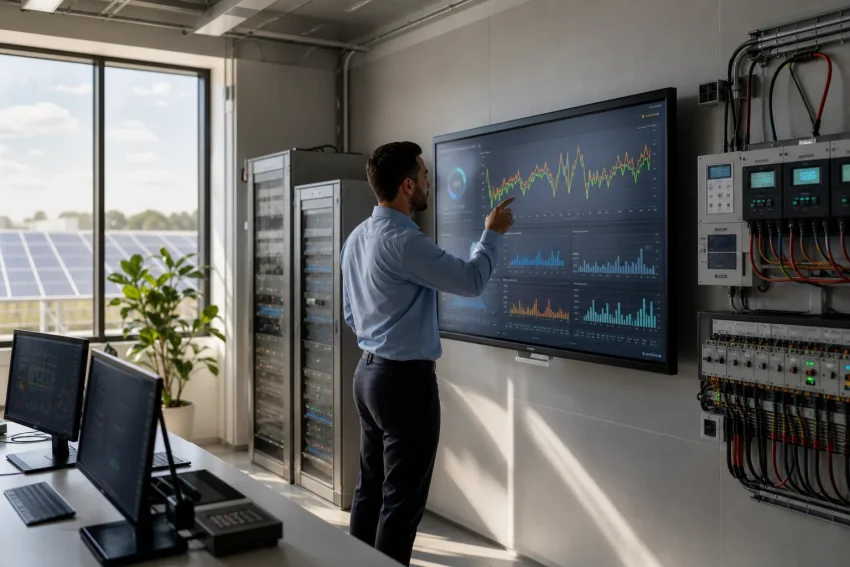
Energy costs are climbing, regulations are tightening, and choosing the wrong AI partner can lock you into rigid, expensive systems that fail to adapt. For businesses and property professionals serious about energy efficiency, the decision isn’t just technical, it’s strategic. Lifee, a French leader in AI-powered home automation and custom energy solutions, has helped organizations cut waste and automate intelligently without sacrificing control.
This guide walks you through the must-ask questions, red flags to avoid, and criteria that separate vendors who overpromise from partners who deliver scalable, sustainable results tailored to real operations.
Introduction to AI Software Development in 2026
AI software development has moved beyond the realm of research labs and pilot programs. In 2026, it stands as the foundation for innovation in sectors where efficiency and adaptability are essential. The combination of advanced machine learning, large language models (LLMs), and robust automation tools has redefined what is possible in software design and deployment. Modern platforms allow both enterprises and individual property owners to adopt AI-driven solutions without the prohibitive costs or complexity that once limited adoption.
Today, AI powers many mission-critical systems across industries, from real-time energy management platforms to adaptive building controls. Importantly, the misconception that AI is exclusive to tech giants has faded. With scalable, modular solutions available, businesses of any size can now leverage AI to create smarter, more responsive environments and operations.
- AI software development delivers significant impacts in energy and automation, accelerating efficiency and sustainability efforts. Over the last few years, global AI software spending has reached well above 400 billion dollars, driven by demand for intelligent automation and optimization in sectors such as buildings and infrastructure. This scale of investment reflects the growing confidence that well-designed AI systems, like those developed by Lifee, can consistently reduce waste and improve operational resilience.
- Access to AI tools and platforms has expanded, enabling a broader range of organizations to implement intelligent automation. Market analyses of AI in software development estimate that specialized tools for coding assistance, automated testing, and debugging are growing at annual rates above 40 percent, making powerful capabilities available through cloud platforms and APIs rather than bespoke, on-premise deployments. For property professionals, this means that working with a partner such as Lifee now provides access to advanced AI without the need for a large internal development team.
- Generative AI is reshaping the software development lifecycle itself. Recent industry reports on generative AI in software development indicate that this segment has surpassed 800 million dollars in annual value and is on track to reach several billion by 2034, supported by double-digit growth rates. In practice, this allows AI partners to prototype energy-management features faster, test more scenarios, and deploy updates in shorter release cycles, which directly benefits building owners through more agile, continuously improving solutions.
The Evolution of AI in Software Development
AI has come a long way since its early days as a niche technology. Over the past decade, it has become a practical tool for businesses of all sizes, thanks to leaps in neural networks, natural language processing, and predictive analytics. Today, AI-powered software does not simply follow rigid rules; it learns from real data, adapts to shifting patterns, and uncovers insights that drive better decisions. For instance, a modern AI system can connect with IoT sensors in your building, monitor real-time conditions, and automatically fine-tune settings to optimize comfort and efficiency without constant oversight.
In energy management and home automation, this shift means software can now anticipate your needs, automatically adjust to changes in usage, and consistently deliver the best performance with minimal manual effort. Lifee’s engineering teams use these advances to build LLM-powered control layers that can interpret complex building data and orchestrate energy savings strategies tailored to each customer’s constraints.
Why AI Matters for Energy and Automation
AI technology is a game-changer for energy management and home automation. Predictive analytics and automated controls make it possible to forecast energy demand, spot inefficiencies, and orchestrate complex building systems with precision. Think about your building’s heating and cooling adjusting before peak usage hits, or your smart home dimming the lights and powering down idle devices when everyone leaves. This goes beyond convenience; AI directly supports compliance with evolving regulations and helps organizations hit their sustainability targets more easily.
- AI enables real-time monitoring and rapid adaptation, so you stay ahead of changing conditions. Academic reviews of AI-driven smart building systems report typical energy savings in the range of 14 to 20 percent while maintaining high occupant satisfaction levels above 90 percent. These results demonstrate that the continuous feedback loop created by AI can cut consumption without degrading comfort, which is exactly the balance Lifee aims to achieve in residential and commercial deployments.
- Its predictive abilities are essential for meeting both regulatory and environmental goals. A systematic survey of AI-based building management solutions has found efficiency improvements between 20 and 50 percent in specific subsystems such as HVAC optimization, lighting control, and demand-side management. When integrated into a unified platform, these gains help property owners comply with stricter energy performance regulations and support corporate decarbonization plans, especially when combined with Lifee’s custom energy audits and advisory services.
- Adoption of AI-enabled building controls is rising steadily. Recent European reports on smart building technology show that the share of building automation and control systems with embedded AI modules has increased severalfold over the last decade, reaching mid-teen percentages of the building stock by 2024 and continuing to grow. For early adopters, this trend means competitive differentiation; for late adopters, it signals that AI-enabled efficiency will soon be the norm rather than the exception.
How AI is Revolutionizing Energy Efficiency and Home Automation
The difference AI makes in energy efficiency and home automation is easy to see. Today’s advanced algorithms dig into detailed consumption patterns, predict future needs, and suggest actionable steps to eliminate waste. Whether you manage a large office building or a single-family home, AI-powered platforms put you in control with insights and automated actions that drive down costs and support a greener footprint. Lifee’s solutions are designed so that these complex capabilities are delivered through intuitive interfaces and clear recommendations rather than opaque black-box decisions.
Energy Efficiency AI Solutions
AI-driven platforms give you a clear window into your energy usage. Intelligent energy audits, for example, keep tabs on every device and system in real time. They spotlight periods of peak demand, flag unusual spikes, and offer recommendations tailored to your property’s unique needs. Consider a facility that uses Lifee’s intelligent energy audits: the system might recommend running heavy equipment during off-peak hours to leverage lower rates, or alert you when an aging HVAC unit starts to waste power, helping you address issues before they impact your bottom line.
- AI-based audits translate data into practical scheduling and retrofit decisions. Research on AI-based optimization in building energy management indicates that dynamic control strategies can reduce electricity consumption by roughly 15 percent under typical conditions. In practice, this can mean rescheduling chiller operation, refining ventilation schedules based on occupancy, or adjusting setpoints during peak pricing periods, all of which Lifee’s platform can automate while providing clear explanations to facility teams.
- Smart buildings increasingly rely on AI for portfolio-level efficiency. Industry surveys on smart building trends show that more than 60 percent of respondents use or plan to use AI for energy optimization, and over half for predictive maintenance and fault detection. For a property group working with Lifee, this means that each building becomes a node in a learning network, where insights from one site inform operational improvements at others, improving performance across the entire portfolio.
- AI helps bridge the gap between technical data and financial outcomes. Several case-based analyses of AI-enabled facilities report operational cost reductions in the range of 15 to 25 percent once advanced analytics and automated controls are fully embedded. By explicitly linking each recommendation to potential savings and payback periods, Lifee’s audits make it easier for CFOs and asset managers to justify investments in upgrades and automation.
Home Automation Powered by AI
AI-powered home automation takes comfort and convenience to a new level. With contextual automation, your home learns your habits, adjusting the thermostat when you leave for work, turning lights on as you enter a room, and powering down appliances at night. These smart routines do not just feel futuristic; they also cut unnecessary energy use, saving money month after month. Plus, intuitive mobile apps and voice controls mean every member of the household can easily manage their environment, no matter their tech skills.
- AI-powered home automation boosts comfort, convenience, and savings without extra effort. Studies of AI-driven smart homes report energy savings of around 10 to 20 percent when occupancy-based lighting and temperature controls are deployed, alongside increased satisfaction scores from residents who appreciate that the system “just works” in the background. Lifee’s contextual automation engine is designed to capture these gains by learning daily routines and adjusting settings in a way that feels natural rather than intrusive.
- User-friendly interfaces ensure everyone can benefit, from tech enthusiasts to first-timers. Smart building adoption surveys indicate that more than 90 percent of facilities now have networked devices and software in place, but users still value simplicity. Lifee focuses on interface clarity, multilingual support, and role-based views so that an energy manager, a maintenance technician, and a tenant all see the information and controls most relevant to their needs.
- AI makes home automation more inclusive and accessible. Generative AI and voice interfaces are increasingly used to create conversational assistants that can explain energy-saving options or adjust settings based on natural language requests. Lifee integrates LLM capabilities to allow residents to ask questions like “How can I lower my bill this month?” and receive tailored, actionable suggestions grounded in their actual consumption data.
Lifee’s Pioneering Role
Lifee stands out for its seamless blend of AI-powered home automation, intelligent energy audits, predictive energy management, and contextual automation. Their software does not force you into a one-size-fits-all mold; instead, it adapts to your building’s unique characteristics and your personal routines. This flexibility is especially valuable for property managers juggling multiple sites: Lifee’s AI can learn each location’s patterns and optimize accordingly, delivering tailored results across an entire portfolio.
Key Features and Benefits of AI-Powered Solutions
When you invest in AI software development for energy management, you should expect results you can see and measure: lower bills, greater comfort, and real progress toward sustainability. Here are some must-have features that set top-tier AI platforms apart and that Lifee has embedded across its product suite.
Automation and Predictive Analytics
AI shines at identifying trends, automating repetitive tasks, and predicting what is coming next. For property managers, this means less time spent on manual adjustments and more proactive management. Predictive analytics can warn you about equipment that is about to fail or highlight inefficiencies before they become costly problems. It is like having a digital assistant that never sleeps, always working to keep your systems running smoothly and efficiently.
- Advanced forecasting supports both operations and budgeting. Government-supported and academic analyses of AI in building management show that accurate demand forecasting can reduce peak loads and improve tariff management, translating into several percentage points of annual cost savings. Lifee’s predictive modules help facility teams simulate the impact of new schedules or retrofits before they commit capital, making energy strategy more data-driven.
- Predictive maintenance reduces downtime and extends asset life. Smart building adoption surveys highlight predictive maintenance and fault detection as one of the top AI use cases, with more than half of respondents either deploying or planning such tools. By detecting anomalies in equipment behavior early, Lifee’s platform allows technicians to prioritize interventions, reducing unplanned outages and prolonging the useful life of major systems such as chillers and boilers.
- Continuous learning improves performance over time. Industry case studies report that the full benefits of AI often emerge after several months, as models refine their understanding of a building’s unique patterns. Lifee designs its projects with this trajectory in mind, setting expectations that the platform will become “smarter” with each season and aligning service contracts to support this ongoing learning curve.
Real-Time Monitoring and Intuitive Control
Modern AI platforms deliver real-time insights through easy-to-read dashboards. Whether you are a homeowner or part of a facility team, you can track energy consumption down to individual rooms or devices and make instant changes as needed. For example, you might notice one area consistently uses more energy and quickly adjust schedules or settings from your phone, ensuring comfort and savings without a learning curve.
- Granular visibility reveals hidden waste. Research on AI-enabled smart buildings shows operational cost reductions of around 17 percent when real-time monitoring is combined with automated alerts and decision support. Lifee implements room-level and device-level breakdowns so that facility teams can identify specific sources of waste, such as constantly running ventilation fans or poorly configured lighting groups.
- Role-based dashboards align information with responsibilities. When decision-makers see only aggregated metrics, it is difficult to translate insights into action. Lifee’s interfaces allow energy managers to view portfolio benchmarks, site managers to see local performance, and tenants to understand their personal footprint, which fosters shared accountability for savings targets.
- Mobile and voice control meet users where they are. The spread of smartphones and connected voice assistants has transformed how people expect to interact with technology. Lifee’s design teams make sure that critical functions, such as activating energy-saving modes or acknowledging alerts, are available within a few taps or spoken commands, reducing barriers to everyday use.
Customization and Scalability
Every property is different, and your AI solution should reflect that. Leading platforms offer deep customization, letting you set your own automation rules and integrate with existing systems, old or new. Scalability is just as important: whether it is one home or a hundred buildings, your platform should deliver consistent results and keep your data secure as you grow.
- Custom project design means you get a solution that fits your real-world needs, not just a generic model. Lifee’s engineers start with a detailed assessment of each site, including envelope characteristics, existing equipment, and occupant behavior, before configuring AI models and automation rules. This tailored approach ensures that, for example, a historic building with mixed-use occupancy receives different control strategies than a modern open-plan office.
- Scalable platforms make it easy to expand or upgrade in the future, protecting your investment. Market data on AI in software development shows rapid growth in modular platforms and cloud-native architectures, which simplify scaling across portfolios. Lifee builds on these architectures so that adding a new building or integrating a new sensor technology is a configuration task rather than a full redevelopment effort.
- Security and compliance are built into the scaling strategy. As more data flows through AI platforms, cybersecurity and regulatory compliance become critical. Lifee follows industry best practices on data encryption, access control, and privacy, aligning its solutions with European regulations while still allowing customers to leverage detailed insights from their energy and occupancy data.
How to Choose the Right AI Software Development Partner
Picking the right AI software development partner is a decision that shapes your results for years to come. You want a team that not only builds robust solutions but also understands your goals, provides reliable support, and keeps innovating as your needs evolve. A thoughtful approach to selection will help you avoid common pitfalls and ensure your investment pays off.
Checklist for Selecting an AI Software Development Company
- Technical Expertise: Make sure your partner has hands-on experience with AI, machine learning, and automation in energy and home automation settings. Ask how they use modern frameworks, LLMs, and edge computing to deliver real-time control, and request evidence from projects where these technologies have translated into measurable savings.
- Proven Industry Experience: Look for a solid track record delivering results in energy or property management, not just general tech projects. Partners like Lifee that specialize in buildings and energy can better anticipate constraints such as tenant comfort, grid interactions, and compliance audits.
- Customization Capabilities: Check that they can tailor solutions for your unique operations, including smooth integration with what you already have. A strong partner will be able to work with your current meters, building management systems, and data platforms rather than insisting on a complete replacement.
- Technology Stack: Ensure they use future-proof technologies, like secure IoT and scalable cloud systems, to keep you ahead of the curve. Given that AI in software development is projected to grow dramatically in the coming years, selecting a stack that can absorb new capabilities such as advanced generative models is essential.
- Post-Launch Support: Ongoing support and updates are really important so your system keeps improving over time. Ask about monitoring, model retraining, and upgrade cycles; Lifee, for example, offers continuous improvement programs that align AI tuning with seasonal patterns and regulatory changes.
- Alignment with Sustainability Goals: Your partner should care as much as you do about reducing energy waste and meeting regulations. Look for explicit sustainability metrics in project proposals, such as targeted percentage reductions in energy use or specific certification milestones, and confirm how these will be tracked and reported.
During your search, ask for detailed case studies, speak with reference clients, and request a clear innovation roadmap. Be wary of promises of fast results without a deep understanding of your industry’s unique challenges, and pay particular attention to how a partner plans to support you once the initial deployment is complete.
Why Lifee Sets the Standard
Lifee is a standout in AI software development for energy management and home automation. Their comprehensive, client-focused approach, combined with a powerful technology stack and proven expertise, means you get solutions that work and keep working as your needs change. Clients appreciate Lifee’s dedication to continuous improvement, with ongoing support and updates that ensure each solution stays ahead of both regulatory changes and user expectations.
Data-Driven Performance: What Recent Studies Reveal
Beyond vendor promises, it is important to understand how AI software development is performing globally and how those numbers apply to projects like Lifee’s. Recent government-backed analyses, academic research, and industry white papers provide a concrete picture of what you can reasonably expect when AI is deployed effectively in energy management and smart buildings.
Global AI Software and Development Markets
Several market research reports in 2026 estimate that the Generally AI software market is approaching 450 billion dollars, with AI in software development alone projected around 700 million dollars and growing at more than 40 percent annually. Generative AI in the software development lifecycle, a subset focused on code generation, documentation, and testing automation, has crossed the 800 million dollar threshold and is forecast to reach multiple billions by the early 2030s. For customers, these figures signal that AI software development is no longer experimental but an established industry, and Lifee’s participation in this landscape ensures access to mature tools rather than fragile prototypes.
Building-Level Energy Savings and User Outcomes
Peer-reviewed studies on AI-driven smart buildings show consistent energy savings in the mid-teens, with some systems reporting reductions between 20 and 50 percent in specific subsystems like HVAC and lighting under optimal conditions. One recent review documented energy savings around 14 percent alongside a resident satisfaction rate of 91 percent, confirming that effective AI does not require sacrifices in comfort. Lifee builds on this evidence base, calibrating its targets and monitoring frameworks so that projects aim for realistic but meaningful savings that can be documented for owners, regulators, and investors.
Adoption Metrics in Smart Buildings and Construction
Industry surveys from 2025 indicate that roughly 91 percent of respondents report some level of smart building technology deployment, such as connected sensors and building management systems. However, AI is still unevenly adopted: around 62 percent use or plan to use AI for energy optimization, and just above half for predictive maintenance, while fully integrated, organization-wide AI across multiple processes remains below a few percent of respondents. This gap between potential and full adoption underscores why choosing a specialized partner like Lifee matters; experienced teams help move AI from pilot status to everyday operational practice.
Comparing AI Approaches for Energy Management
Not all AI solutions for energy management are built in the same way. Some focus narrowly on single subsystems, while others, like Lifee’s, adopt a holistic approach that combines audits, real-time control, and user-centric automation. The table below summarizes key differences between typical point solutions and integrated platforms such as Lifee.
| Dimension | Point Solution AI | Integrated Platform (Lifee) |
|---|---|---|
| Scope of Optimization | Targets a single system (for example, HVAC or lighting) with limited cross-impact analysis, which can leave other sources of waste unaddressed. | Covers multiple systems, including HVAC, lighting, appliances, and occupancy patterns, allowing combined strategies that deliver higher Generally savings. |
| Data Integration | Relies on a narrow set of inputs, often from one vendor’s devices, which can restrict insights and flexibility when equipment changes. | Aggregates data from diverse meters, sensors, and external sources, enabling richer analytics and smoother integration during retrofits or expansions. |
| User Experience | Provides technical dashboards mainly for specialists, which can make adoption harder for non-experts. | Offers role-based views and intuitive controls for energy managers, maintenance teams, and occupants, increasing engagement and actual usage. |
| Scalability Across Portfolio | Often requires separate configurations for each site, with limited support for portfolio-level analytics. | Designed to replicate successful configurations across buildings and provide portfolio benchmarks, making multi-site optimization more straightforward. |
| Sustainability Reporting | Might produce basic energy metrics but limited support for certifications or ESG reporting. | Supports detailed reporting aligned with sustainability frameworks, helping owners document progress for regulators and investors. |
Case Studies: AI Software Development Success Stories in Energy Management
Nothing brings the benefits of AI software development to life like real-world examples. The following scenarios, drawn from Lifee’s experience, showcase how AI solutions deliver real business value and operational improvements in both residential and commercial contexts.
Residential Smart Home Automation
In Lyon, a family decided to upgrade their home with Lifee’s AI-powered home automation. The system learned their routines, automatically adjusting heating, cooling, and lighting for every part of the day. Over one year, energy bills dropped by 30 percent, all while comfort levels stayed high. Contextual automation made sure energy was not wasted when rooms were empty, and personalized schedules kept everything running just the way the family liked it.
Commercial Energy Optimization
A real estate company managing multiple office buildings brought in Lifee’s intelligent energy audit and predictive management suite. The platform continuously analyzed each site’s consumption, predicted peak loads, and fine-tuned HVAC and lighting schedules. Within months, the group cut operational energy costs by 22 percent and achieved sustainability certifications well ahead of deadline. The AI’s ability to learn and adapt to each building’s needs made managing a complex portfolio much simpler.
- These stories highlight how easily AI-powered solutions scale and adapt from single homes to multiple commercial properties. By applying similar principles of contextual automation and predictive control in different settings, Lifee demonstrates that strong project design, not building size, is the main driver of success.
- Clients consistently report smoother management, happier occupants, and clear progress on sustainability goals. Feedback from users often emphasizes both the tangible reduction in bills and the qualitative sense that buildings “feel smarter,” with fewer complaints about comfort and less manual troubleshooting.
- Portfolio owners gain better visibility into performance gaps. When each building is instrumented and managed through a common AI layer, executives can see which sites are leading or lagging, prioritize investments, and share best practices more effectively across their teams.
New Frontiers: Governance, Ethics, and Human-Centered Design in AI Energy Solutions
As AI software development becomes central to energy management, new questions emerge around governance, ethics, and the human experience of automated buildings. Addressing these aspects early helps ensure that solutions like Lifee’s deliver benefits that are technically sound, socially acceptable, and aligned with broader sustainability goals.
Responsible AI and Regulatory Alignment
Energy and data regulations are evolving rapidly, particularly in Europe, where building performance standards and AI governance frameworks are being strengthened. Lifee incorporates responsible AI practices by documenting decision logic, providing explainable recommendations, and aligning data handling with applicable regulations. This approach reassures property owners that efficiency improvements are achieved in a transparent and compliant manner, which matters especially for public-sector clients and large real estate funds.
Human-Centered Automation and Occupant Trust
Even the most sophisticated AI system can fail if occupants do not trust or understand it. Studies of smart building adoption show that communication and user involvement are really important to acceptance. Lifee designs automation so that users can override settings, understand why changes occur, and see tangible benefits such as improved comfort or lower bills. By treating occupants as partners rather than passive recipients of automation, Lifee fosters long-term engagement and reduces the risk of systems being disabled or ignored.
Data Strategy and Integration with ESG Reporting
For many organizations, energy data is now part of broader environmental, social, and governance reporting. AI platforms like Lifee’s help collect, structure, and analyze consumption and emissions data in formats that can feed directly into ESG dashboards and sustainability disclosures. This capability turns operational optimization into strategic insight, enabling executives to track progress against net-zero targets and communicate achievements to stakeholders with confidence.
Conclusion and Next Steps
AI software development is unlocking new possibilities for energy management and home automation in 2026. Whether you are an individual, a business, or a property professional, the right AI partner gives you the power to boost efficiency, cut costs, and create more sustainable spaces. With features like predictive analytics, real-time monitoring, and fully custom automation, today’s AI platforms are accessible to everyone, not just large enterprises.
Lifee’s experience shows how tailor-made AI solutions can elevate comfort, convenience, and sustainability in any environment. By carefully evaluating potential partners for expertise, support, and customization, you can be confident your investment will pay off for years to come.
- AI-driven solutions are now essential tools for anyone looking to stay competitive and sustainable in energy and property management. Market data and case studies confirm that AI is moving from optional add-on to core infrastructure, and early adopters are already seeing lower operating costs and stronger regulatory compliance.
- Partnering with an experienced, client-focused provider like Lifee helps maximize your return while keeping your systems flexible for the future. Lifee’s combination of technical depth, sector expertise, and human-centered design reduces implementation risk and ensures that AI capabilities grow with your organization’s ambitions.
- Structured governance around AI and energy data turns operations into strategic advantage. By embedding responsible AI, transparency, and ESG-aligned reporting into projects, Lifee helps clients transform everyday energy decisions into long-term sustainability leadership.
If you are ready to take the next step with your energy management or home automation, explore what AI software development can do for you. Reach out to a Lifee expert to start designing a solution that fits your unique needs and puts you in control of your energy future.