
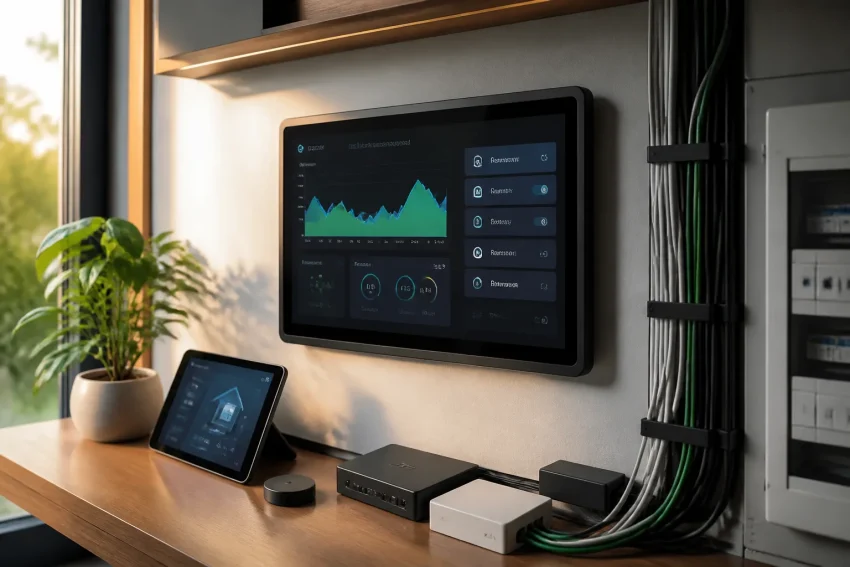
Most businesses leak energy and productivity the same way: lights blazing in empty rooms, HVAC systems running on autopilot, teams buried in manual monitoring. Lifee, a French innovator in AI-powered home automation and energy efficiency, has spent years helping individuals, businesses, and real estate professionals reclaim both. Their intelligent systems don’t just automate; they learn, adapt, and cut waste where it hides.
This guide walks you through seven practical AI automation ideas that eliminate repetitive work and slash energy costs without requiring a complete infrastructure overhaul. You’ll see exactly how smart automation turns overlooked inefficiencies into measurable savings, starting today.
Understanding AI Automation: Core Concepts and 2026 Relevance
AI automation brings together the intelligence of AI with the reliability of automated systems, allowing everyday tasks and complex processes to run with minimal hand holding. In 2026, these solutions are not just for tech giants; anyone from homeowners to facility managers can leverage them to boost energy efficiency and productivity.
- AI automation adapts to your habits and needs. Think about your office lights dimming as soon as the last person leaves, or your home heating kicking in just before you arrive, with no manual switches or complicated settings needed. Systems like Lifee’s analyze occupancy, time of day, and usage patterns to learn when spaces should be active or at rest, turning those patterns into automatic energy savings.
- Ideal for reducing energy waste and repetitive chores. Smart thermostats, connected lighting, and AI assistants take over the routine decisions that people rarely have time to manage. When Lifee’s platform detects a pattern of unused meeting rooms or consistently overheated corridors, it quietly adjusts setpoints and schedules, reducing both waste and the need for manual checks.
- Built for real buildings, not theoretical models. Modern AI automation platforms ingest data from meters, sensors, and building management systems, then refine their decisions over time. That means the more you use Lifee’s automation, the better it becomes at forecasting demand, spotting anomalies, and tuning comfort without extra effort.
The old stereotype that AI automation is only for large corporations is fading fast. Today’s modular, plug and play solutions mean even a single apartment or a small business can install and benefit from adaptive automation, with no deep tech skills required. Lifee’s approach is to start with a focused use case, such as dynamic heating for a small office or occupancy based lighting in a residential hallway, and scale from there as results and confidence grow.
What is AI Automation?
At its heart, AI automation means systems that learn, adjust, and optimize on the fly. Instead of sticking to rigid schedules, these systems tweak their behavior based on your habits, energy prices, and even the weather, so your space runs efficiently with less effort from you. In practice, Lifee’s AI engine continuously ingests live data from sensors and meters, compares it to historical trends, and then applies the best action in that moment, whether that is dimming lights, lowering HVAC output, or suggesting a workflow shortcut for your team.
Why AI Automation Matters in 2026
As energy prices climb and sustainability targets tighten, AI automation is no longer a luxury; it is a smart investment. Global spending on AI in energy is already measured in tens of billions of dollars, and specialized AI energy efficiency tools are growing at annual rates above 20 percent, reflecting strong confidence that intelligent automation can meaningfully reduce consumption and emissions. By letting intelligent systems manage the little things, you free up time, shrink your carbon footprint, and see real savings on your bills, while aligning your building with upcoming regulatory requirements around monitoring, reporting, and decarbonization.
Key Technologies Behind AI Automation
Today’s AI automation is powered by a mix of smart technologies. Each one plays a role in cutting energy waste and taking repetitive work off your plate. Lifee’s platform combines these layers so that data flows seamlessly from sensors to decisions to tangible savings.
- Machine learning and predictive analytics. These tools spot trends in your energy use and workflow data, then make real time tweaks. For example, a building’s system might notice that certain meeting rooms are empty most afternoons and automatically reduce heating or lighting there. In smart building case studies, AI driven control strategies have delivered energy savings of around 14 percent while reducing operational and maintenance costs by more than 10 percent, showing how powerful pattern recognition can be in everyday spaces.
- Natural language processing (NLP). Ever asked your home to turn off the lights? That is NLP in action. Voice controlled assistants and chatbots make it easy for anyone to manage automation, with no technical know how needed. Lifee’s integration with conversational interfaces allows facility managers to request reports, adjust setpoints, or launch scenarios such as “evening mode” using simple phrases, bringing powerful building controls within reach of non specialists.
- Intelligent automation systems. These bring together data from sensors, the weather, your habits, and even grid signals. Picture a lighting system that only brightens when the room is occupied and natural light is low, saving energy without sacrificing comfort. Across portfolios of smart buildings, AI systems that coordinate occupancy, environmental data, and user feedback have achieved energy savings in the low double digit range while maintaining satisfaction scores above 90 percent.
With these advances, AI automation is more approachable and flexible than ever. What started in industrial factories now powers everything from digital workflows to smart homes and office buildings. Lifee’s value is to translate this technology into turnkey solutions for individuals, businesses, and real estate professionals, focusing on fast payback and minimal disruption.
Machine Learning and Predictive Analytics
Machine learning means your systems get smarter with use. In an office, predictive analytics might anticipate when to dial back cooling during slow afternoons, trimming utility bills and eliminating waste automatically. In a Lifee deployment, algorithms track occupancy patterns, weather forecasts, and tariff structures, then propose or execute changes ahead of time, such as pre cooling before a heatwave at off peak rates or reducing ventilation in unoccupied zones while maintaining air quality standards elsewhere.
Natural Language Processing (NLP)
By turning spoken commands into actions, NLP brings easy control to everyone. Whether you are a technology expert or a first time user, you can ask for what you want and let the system handle the rest. Lifee’s interfaces are designed so that a site manager can simply say “show me today’s energy anomalies” or “switch the third floor to eco mode” and receive immediate action or a clear, data backed recommendation.
Intelligent Automation Systems
These systems use inputs from motion sensors, utility meters, and weather forecasts to make smart choices in real time. For example, a school could automate HVAC settings based on class schedules and headcounts, cutting unnecessary energy use when rooms are empty. Lifee often layers additional intelligence on top, such as learning which wings of a building are consistently underused and proposing re zoning or targeted upgrades, so automation becomes a vehicle for strategic space planning as well as cost control.
7 Actionable AI Automation Ideas for Energy Efficiency and Productivity
You do not need to rip out your current setup to see the benefits of AI automation. Here are seven ways to target specific pain points and start saving time and money right away. Lifee’s teams use these levers as building blocks, combining them into tailored projects for homes, offices, and mixed use buildings.
- AI powered home automation. Let AI take care of your lighting, heating, cooling, and appliances. Lifee’s system, for example, learns when you are most active and makes sure spaces are ready for your arrival while powering down when you are away, effortlessly reducing waste. Households that adopt smart thermostats and connected plugs often see heating and cooling energy drop by 10 to 20 percent within the first year, especially when the automation is paired with user friendly apps that show real time savings.
- Intelligent energy audits. Use AI analytics to dive deep into your historical energy use. Many businesses have discovered hidden inefficiencies and saved up to 30 percent in a year by following tailored upgrade recommendations from these audits. Lifee’s audit workflows cross reference meter data, equipment performance, and occupancy profiles, highlighting quick wins such as rescheduling high load processes to off peak hours, right sizing HVAC equipment, or rebalancing control zones before more capital intensive upgrades are considered.
- Predictive energy management. AI models can forecast when your building will need the most energy and shift demand to cheaper off peak hours. In apartment complexes, for instance, this approach smooths out usage and cuts costs for everyone, while easing pressure on the grid during peaks. Energy market studies show that buildings participating in demand response programs can reduce peak demand by double digit percentages, and Lifee’s automation makes those adjustments invisible to occupants by carefully sequencing loads and storage.
- Automated workflow optimization. Hand off repetitive office tasks such as data entry, report generation, or recurring scheduling to AI bots, freeing your team to focus on creative and strategic work. Recent surveys indicate that almost 60 percent of companies have implemented some form of automation and that AI enabled workflows are expected to grow from a small fraction today to around a quarter of all workflows by the end of 2025. Lifee extends this logic into building operations, automating incident logging, compliance reporting, and routine checks so facility teams can focus on proactive improvements instead of paperwork.
- Contextual automation for smart environments. Let real time data drive systems that respond instantly, such as blinds that adjust for optimal daylight or lighting that dims as the sun comes out. Offices using contextual automation have seen lighting energy use drop by more than 20 percent, and whole building case studies report energy savings in the low to mid teens while maintaining high occupant satisfaction. Lifee’s contextual engine maps zones, activities, and user preferences so the environment feels naturally responsive rather than rigid or intrusive.
- Custom project design with AI. Work with experts to design automation solutions that fit your unique needs. Lifee often begins with a detailed assessment, then crafts a strategy that delivers personalized results, ensuring every feature is relevant and effective. In commercial portfolios, this can mean starting with one flagship building to prove the impact, then rolling out standardized but adaptable templates to similar sites, capturing economies of scale while respecting local constraints.
- Remote monitoring and control. Use AI powered dashboards to keep an eye on your energy systems from anywhere. Instant alerts catch problems fast, such as a heater left on after hours or a ventilation system stuck in full speed, and let you fix them with a tap, minimizing waste and hassle. For multi site real estate operators, Lifee’s remote operations center consolidates data across assets, ranking sites by performance and surfacing anomalies so managers can prioritize interventions where the impact will be greatest.
Even starting small, such as automating just one room, can reveal measurable savings. Whether you opt for a smart plug at home or a full scale building management platform, there is a solution that fits your budget and needs. Lifee’s philosophy is to deliver quick wins that pay for the next layer of automation, building a business case one project at a time.
AI Powered Home Automation
Connect your lights, thermostat, and appliances to an AI hub, and let the system handle the rest. With Lifee, your home can pre heat before you arrive and turn off devices in unused rooms, keeping you comfortable while saving energy. As the system learns your routines, it can propose additional optimizations, such as staggering appliance use to avoid peak tariffs or aligning comfort settings with seasons and occupancy.
Intelligent Energy Audits
AI powered audits dig into your energy usage, unearthing patterns that manual checks often miss. You receive clear, actionable steps, such as adjusting insulation, fine tuning control sequences, or rescheduling equipment, that pay off quickly. Lifee’s reports translate complex analytics into practical recommendations, ranking actions by expected savings, cost, and complexity so decision makers can move quickly.
Predictive Energy Management
Using historical data and external factors, predictive AI helps you shift energy hungry tasks to times when rates are lowest. Businesses scheduling laundry, data center cooling, or charging fleets at off peak hours are seeing real cost reductions, often in the range of 10 to 20 percent on targeted loads. Lifee’s algorithms also support participation in demand response programs, automatically limiting or shifting agreed loads when the grid operator signals a peak, in exchange for financial incentives.
Automated Workflow Optimization
Let AI bots handle repetitive tasks across departments. In accounting, for example, automated reconciliation means fewer mistakes and faster turnaround, giving teams more time for value added work. Lifee applies similar logic to building operations, automating routine data pulls, anomaly detection, and compliance reports, which can save facility managers several hours per week and reduce the risk of missing critical issues.
Contextual Automation for Smart Environments
Systems that react to real time data, such as lights adjusting with daylight or HVAC responding to occupancy, deliver both comfort and savings. Offices have reported up to 15 percent lower energy bills after switching to contextual automation, and those savings compound when combined with efficiency upgrades and user engagement. Lifee’s projects often include occupant feedback loops, allowing people to override settings temporarily but feeding those preferences back into the AI so the environment feels more attuned over time.
Custom Project Design with AI
Every building is different, so a tailored approach makes sense. By assessing your specific needs and integrating the right mix of technology, Lifee ensures your automation project delivers maximum impact without disrupting existing routines. Typical design phases include data collection, opportunity identification, co creation of scenarios with stakeholders, and phased deployment, backed by training and change management so teams feel confident using the new tools.
Remote Monitoring and Control
Centralized dashboards give you full command over your systems, wherever you are. Catch issues early, make remote adjustments, and enjoy peace of mind knowing your building is running efficiently at all times. Lifee’s platform highlights priority alerts, such as abnormal consumption spikes or comfort deviations, and suggests probable causes and recommended actions, reducing both response time and diagnostic effort.
Traditional Automation vs. AI Powered Automation
Knowing the difference between traditional and AI powered automation helps you make smarter choices about upgrades and investments. Lifee’s projects often build on existing automation, adding intelligence where it matters most rather than replacing everything at once.
| Aspect | Traditional automation | AI powered automation | Lifee’s hybrid approach |
|---|---|---|---|
| Control logic | Fixed schedules and rules defined once and updated manually. Effective for predictable tasks but slow to respond when usage patterns or tariffs change. | Dynamic decisions based on live data, forecasts, and learned patterns. Continuously refines actions to match current conditions. | Keeps reliable schedules for core processes while layering adaptive controls on variable loads such as lighting, ventilation, and comfort zones. |
| Energy performance | Can deliver baseline efficiency but often leaves savings untapped when spaces are underused or weather deviates from averages. | Frequently unlocks additional energy savings in the low double digit range by reacting to occupancy, weather, and grid signals in real time. | Uses traditional automation as a foundation and adds AI modules where data and savings potential justify investment, improving Generally performance without heavy disruption. |
| User experience | Comfort may be inconsistent, with some rooms over conditioned and others neglected, because the system cannot fully adapt to people’s behavior. | Can personalize comfort settings and workflows, learning preferences and routines over time for smoother experiences. | Combines familiar controls with intuitive interfaces, such as Lifee’s dashboards and assistants, so occupants feel in control while AI handles the background optimization. |
| Scalability | Scaling requires manual configuration and can become complex across multiple sites. | Scales more easily by applying shared models and templates to new spaces, then fine tuning locally. | Uses reusable AI templates for similar building types, accelerating deployment across real estate portfolios while preserving site specific adjustments. |
- Traditional automation. Works off fixed schedules and rules. It is reliable for routine tasks but can waste energy if things change unexpectedly, such as a last minute event or seasonal occupancy shifts. Many buildings still rely on this approach alone, which means lights and HVAC may run even when nobody is present, simply because the default schedule says so.
- AI powered automation. Adapts in real time, learning from your habits and new data. It is always optimizing and can handle surprises or changes with ease, whether those changes are driven by people, weather, or energy prices. By monitoring patterns continuously, AI can propose smarter schedules and nuanced control strategies that traditional systems cannot match.
- Hybrid approaches. Many organizations combine both, using traditional controls for predictability and AI for adaptive efficiency. Lifee’s projects often start by integrating with existing building management systems, then adding an AI layer that suggests improvements and, once trust is established, takes control of selected processes. This reduces risk while unlocking new savings.
Traditional automation still has value, especially for routine jobs. But layering in AI, such as sensors that adjust HVAC based on occupancy, makes existing systems even smarter. For instance, a hotel might use scheduled lighting in hallways but let AI handle room by room climate control, saving energy without sacrificing comfort and allowing personalized experiences for guests.
How Traditional Automation Works
It is all about following the rules. Lights turn off at midnight, HVAC runs from eight to five, and equipment follows fixed sequences. But if a meeting runs late or a room empties early, energy gets wasted because the system cannot adjust on the fly. Lifee’s engineers often find that simple schedule changes combined with occupancy responsive controls deliver immediate savings even before more advanced AI modules are deployed.
AI Automation: Adaptive and Intelligent
AI automation keeps learning and fine tuning, turning off lights the moment everyone leaves or lowering the thermostat when the building empties. This flexibility is what drives ongoing savings in dynamic spaces where usage patterns rarely match static schedules. Over time, Lifee’s algorithms refine their models, moving from simple rules to nuanced strategies that balance comfort, cost, and sustainability targets.
Choosing the Right Approach
Think about your needs, your current setup, and your team’s resources. Many start with hybrid systems, building in more AI as they see results and get comfortable with new technology. Lifee helps stakeholders define a roadmap, from quick software upgrades to deeper retrofits, ensuring that each step aligns with budget, timelines, and organizational capacity.
Future Trends and Innovations in AI Automation (2026 and Beyond)
The field of AI automation is moving fast, with several trends already shaping how we live and work. For Lifee and its clients, these trends translate into new capabilities and expectations around personalization, sustainability, and integration.
- Personalized automation experiences. AI will increasingly tailor every detail, from lighting scenes to HVAC settings, to each person’s preferences. Think about your workspace always set to your ideal temperature and light, without lifting a finger. As employees become accustomed to consumer grade personalization at home, they will expect similar experiences in offices and shared spaces, and Lifee’s profiles and preference learning modules are designed to support that shift.
- Sustainable and smart infrastructure. Integration with renewables, smart grids, and advanced building management is becoming standard. Many commercial buildings now use AI for automated demand response, supporting grid stability and reducing emissions, and market forecasts for AI in energy point to sustained annual growth above 20 percent through the next decade. Lifee’s projects increasingly include coordination with solar, storage, and electric mobility, turning buildings into active participants in a cleaner energy system.
- Innovative companies making AI accessible. Providers like Lifee are putting powerful, easy to use AI automation within reach for homes, small businesses, and real estate professionals, combining adaptive learning with interfaces anyone can navigate. As surveys show that close to 90 percent of organizations already use AI in at least one function, the opportunity is to move from isolated pilots to integrated automation strategies that touch energy, comfort, and workflows in a coherent way.
Staying ahead means treating AI automation as an ongoing process, not a one time fix. Regular checkups and updates help you keep up with new regulations, evolving technology, and shifting expectations. Lifee’s long term partnerships typically include periodic reviews, performance tuning, and feature updates so the system continues to deliver value as your building and organization change.
Personalized Automation Experiences
AI systems are becoming more personal, learning your routines to deliver comfort and efficiency tailored to you, whether at home, at work, or across multiple sites. Lifee’s user centric design ensures that individual preferences are captured and respected, while still optimizing at the building level for energy and sustainability goals.
Sustainable and Smart Infrastructure
By deeply integrating with renewable energy and grid responsive systems, AI automation is making buildings greener, more resilient, and ready for the challenges of tomorrow. Lifee’s solutions often include forecasting of on site generation and storage, helping operators decide when to rely on local resources versus the grid to minimize costs and emissions.
The Role of Companies like Lifee
Lifee and similar innovators are breaking down barriers, making the benefits of AI automation available to everyone, from busy families to growing enterprises. Through modular offers and clear service models, Lifee helps clients move from curiosity to concrete projects that demonstrate measurable gains.
AI Automation by the Numbers: Human Centered Data Highlights
Behind the technology, there is a clear story in the data. Over the last few years, statistics from research firms, government bodies, and industry surveys have highlighted how quickly AI automation is becoming mainstream and how much value it is unlocking. Lifee’s work sits within this broader movement, translating global trends into local, tangible results.
- AI in energy is a fast growing market. Global estimates place the AI in energy market value at well over 30 billion dollars in 2025, with projections to exceed 180 billion dollars by 2034. This translates into increasingly mature tools for forecasting demand, optimizing supply, and controlling equipment. For Lifee’s clients, it means that the underlying technologies are robust and well tested, reducing risk when adopting AI driven energy solutions.
- Specialized AI energy efficiency tools are scaling up rapidly. Studies of AI energy efficiency tools report market sizes in the low single digit billions in 2025, growing at compound annual rates above 20 percent through the 2030s. These tools focus specifically on identifying and eliminating waste, a core promise of Lifee’s offer, and their growth reflects a broad recognition that traditional energy management is no longer enough to hit climate and cost targets.
- Workflow automation and AI enabled processes are becoming the norm. Surveys indicate that almost 60 percent of businesses have implemented some form of automation and that AI driven workflow markets are projected to reach tens of billions of dollars by the end of the decade. In parallel, executive studies show expectations that AI enabled workflows will expand from a small fraction today to around a quarter of all workflows by the end of 2025. Lifee leverages this momentum by embedding building operations into broader enterprise automation strategies, ensuring that energy and comfort are treated as integral parts of digital transformation.
- AI adoption is widely spread across organizations. Global AI surveys report that roughly 88 to 89 percent of organizations now use AI in at least one business function, compared with much lower shares just a few years ago. Within the European Union, official statistics show that close to 20 percent of enterprises used at least one AI technology in 2025, underscoring that AI is no longer reserved for a handful of early adopters. For Lifee’s clients, this means that staff are increasingly familiar with AI concepts, smoothing change management and helping automation projects gain traction.
- Automation delivers measurable productivity and cost benefits. Industry analyses suggest that AI powered workflow automation can cut operational costs by around 30 percent for targeted processes, deliver 10 to 20 percent cost reductions in selected functions, and free up several hours per employee per week. When combined with energy centric automation, such as Lifee’s projects, the result is a double dividend: people recover time from repetitive tasks while buildings consume less energy, making the Generally system more productive and sustainable.
Data Snapshot: Energy and Workflow Automation Metrics
| Metric | Indicative value | What it means in practice | Relevance for Lifee’s clients |
|---|---|---|---|
| AI in energy market size | Around 33 to 42 billion dollars in 2025 to 2026, with strong growth toward 2034 | Vendors and investors are committing resources to AI energy tools, making solutions more capable and accessible. | Lifee can build on a mature ecosystem of hardware and software, focusing on design and integration rather than inventing core tools from scratch. |
| AI energy efficiency tools market | Around 3 to 4 billion dollars in 2025 to 2026, with annual growth above 20 percent | Specialized tools focused on efficiency are expanding quickly, driven by climate policies and economic pressure. | Lifee aligns with this niche, offering projects that directly target waste and quantify savings using proven methodologies. |
| Workflow automation market | Mid twenties billion dollars by 2026, growing steadily through 2030 | Automation is now a mainstream investment area, not an experimental side project. | Lifee’s focus on automating building operations fits within wider corporate automation strategies, improving buy in from leadership. |
| Organizations using AI | Roughly 88 to 89 percent use AI in at least one function | Most organizations have at least some experience with AI tools or projects. | Lifee can build on existing familiarity, pushing automation deeper into energy and facilities without starting from zero. |
| Enterprises using AI in the European Union | Around 20 percent used at least one AI technology in 2025 | AI adoption is uneven but growing, with strong momentum among early movers. | Lifee’s French and European context is well aligned with this trend, helping local clients stay competitive. |
Risk, Governance, and Ethical Automation in Real Buildings
As AI automation becomes embedded in homes and commercial properties, questions of trust, safety, and governance move to the forefront. For Lifee, human centric design and transparent control are as important as technical performance.
Responsible AI Governance for Automation Projects
AI driven automation affects comfort, costs, and sometimes safety, which means governance cannot be an afterthought. Lifee typically establishes clear roles and rules for each project, defining who can override the system, how changes are logged, and how algorithms are monitored for bias or unintended effects. Regular reviews and audit trails help ensure that automation remains aligned with organizational policies and regulatory requirements.
Data Privacy and Security in Connected Buildings
Effective automation depends on data, from occupancy signals to energy usage and sometimes user preferences. Lifee’s architecture is designed to protect this data through encryption, strict access controls, and separation of personally identifiable information from aggregated analytics. By adopting best practices from cybersecurity and data protection regulations, Lifee ensures that clients can enjoy the benefits of AI automation without compromising privacy or security.
Human in the Loop: Keeping People in Control
Even the most advanced AI systems should assist rather than replace human judgment in critical decisions. Lifee’s solutions include configurable levels of autonomy, from suggestive modes where the AI proposes actions to fully automatic modes where it acts within predefined bounds. Facility managers and occupants retain the ability to override or fine tune settings, and their feedback feeds back into the training of models, keeping the automation grounded in real world needs and expectations.
Getting Started with AI Automation
AI automation is changing the game for energy management and repetitive work in 2026, delivering scalable solutions that fit any space or budget. By combining technologies such as machine learning, NLP, and contextual automation, you can unlock major savings and enjoy a smoother, more comfortable environment, whether you are optimizing a single room or an entire building. Lifee’s mission is to make that journey straightforward, from first idea to fully operational system.
- AI automation is a practical, powerful way to cut energy waste and streamline everyday tasks. By handing routine decisions to intelligent systems, you reduce the risk of leaving lights on, overheating spaces, or spending hours on manual monitoring. Lifee’s projects often start with a clear problem statement, such as high winter energy bills or overloaded facility teams, and design focused interventions that tackle those pains first.
- There are accessible options for everyone, from DIY enthusiasts to organizations seeking expert partnerships. Homeowners can begin with simple devices like smart thermostats and plugs, while businesses and real estate professionals might look to Lifee for integrated, multi site solutions. The key is to match ambition with capacity, building complexity gradually as benefits and experience grow.
- Adopting AI powered solutions leads to real improvements in sustainability, efficiency, and comfort. Case studies across sectors show double digit reductions in energy use, measurable drops in operational costs, and higher satisfaction scores when automation is deployed thoughtfully. Lifee quantifies these gains through dashboards and periodic reports, helping clients demonstrate value to internal and external stakeholders.
Now is the perfect time to explore how AI automation can work for you. Start small with a pilot project or reach out to experts like Lifee for tailored guidance, and take the first step toward a smarter, more efficient future. With the right mix of technology, human insight, and ongoing refinement, AI automation becomes not just a set of tools, but a strategic asset for your home, your business, or your property portfolio.
FAQs: Common Questions About AI Automation and Lifee
How quickly can AI automation start saving energy in an existing building?
In many Lifee projects, simple measures such as occupancy based lighting and smarter HVAC schedules start delivering savings within weeks of deployment. Deeper optimizations that rely on learning patterns and refining controls typically show clear results over a period of a few months, with payback times that are often measured in one to three years depending on the scope.
Do I need to replace my existing equipment to benefit from Lifee’s AI automation?
Not necessarily. Lifee is designed to integrate with existing building management systems and connected devices wherever possible, using data and control interfaces that are already in place. Upgrades may be recommended for particularly inefficient or incompatible equipment, but much of the value comes from smarter use of what you already own.
Is AI automation suitable for small properties and residential buildings?
Yes. While some AI tools were originally developed for large industrial sites, Lifee has tailored its solutions for apartments, single family homes, and small offices. By focusing on modular devices and cloud based intelligence, Lifee can deliver meaningful automation and energy savings even in compact spaces with limited budgets.
How does Lifee measure and report the impact of AI automation projects?
Lifee establishes baseline metrics before deployment, such as energy consumption profiles, comfort indicators, and time spent on manual tasks. After implementation, the platform tracks changes against those baselines and provides visual dashboards and periodic reports that highlight savings, trends, and opportunities for further improvement.
What happens if the AI makes a decision that occupants do not like?
Lifee’s systems always allow for human overrides, either through local controls or digital interfaces. When occupants adjust settings, those actions are logged and can be used to refine future behavior, ensuring that the automation learns from feedback rather than imposing rigid decisions.