
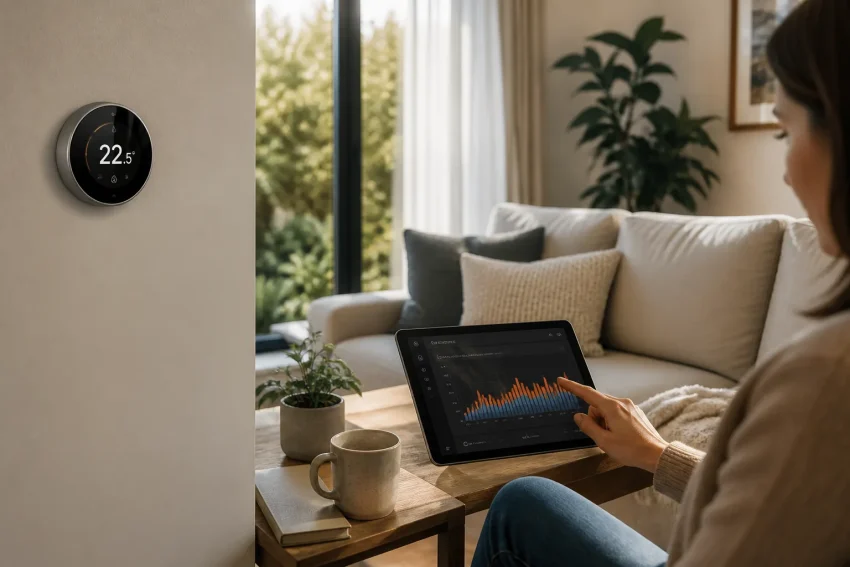
You flip a switch, and the lights obey. You adjust the thermostat, and the temperature shifts. But your home still doesn’t think, it just reacts when you tell it to. Real home automation means your space learns your rhythms, cuts waste, and runs itself while you focus on what matters. Companies like Lifee are building AI-powered systems that don’t just automate, they optimize energy use in real time, turning ordinary homes into intelligent ecosystems.
This guide walks you through where to begin: the essential devices, the logic behind smart routines, and how to build a system that actually saves you time and money without the overwhelm.
What Is Smart Home Automation and Why Does It Matter in 2026?
Smart home automation is all about connected devices and intelligent systems working together to make your daily life easier, more efficient, and more comfortable. Instead of simply reacting to your commands, these systems use data, sensors, and artificial intelligence to anticipate your needs and optimize things like lighting, temperature, security, and energy use automatically.
Think about how far we’ve come. Early home automation was limited to timers and basic remote controls. Now, with AI and IoT, your home can recognize your routines, like when you usually leave for work or come home, and adjust itself accordingly. For example, an AI-powered thermostat can learn your schedule, lowering the heat or AC when you’re out and warming things up just before you return, saving energy without sacrificing comfort.
In 2026, smart home automation is more relevant than ever. Here’s why:
- Energy costs keep rising, and there is growing pressure from governments and utilities to adopt sustainable practices through incentives and building codes that reward lower consumption. For many households, this means that every kilowatt-hour saved by a smart system directly eases pressure on their monthly budget while helping them stay compliant with emerging regulations.
- More devices are connected than ever, with global smart home device shipments approaching nearly one billion units annually, and wireless standards are now reliable and easy to use. This scale of deployment means that ecosystems like Lifee can leverage a rich pool of compatible devices to deliver consistent, high quality automation experiences.
- People want convenience and personalized spaces that reflect their habits and preferences, from lighting scenes that match their mood to indoor climates tuned to their comfort. Surveys in 2024 and 2025 show that nearly half of households with internet access report using at least one smart home feature regularly, which suggests that expectations for adaptive environments are becoming mainstream rather than niche.
- AI and machine learning have made adaptive automation accessible to everyone, not just tech experts, through intuitive apps and natural language interfaces. Platforms such as Lifee embed these capabilities directly into their energy management engines, so even users who never touch a settings menu still benefit from constant optimization happening quietly in the background.
Modern smart home platforms are designed to be user friendly, with simple interfaces and quick setup. You no longer have to be a tech enthusiast or hire expensive contractors to enjoy the benefits. As a result, families, businesses, and real estate professionals are adopting smart home automation to save time, cut energy costs, and enhance daily living.
The Evolution of Home Automation
Home automation has evolved from single purpose gadgets like programmable thermostats to powerful, interconnected systems powered by cloud computing and artificial intelligence. The introduction of open standards such as Matter and Zigbee, along with smaller, more affordable sensors, means automation is no longer reserved for luxury homes. Apartments, offices, and small businesses can now tap into the same energy savings and convenience with minimal hassle, especially when guided by turnkey providers like Lifee that design projects end to end.
Why Smart Home Automation Is Essential Today
With energy efficiency and sustainability on everyone’s mind, smart home automation offers practical ways to tackle these challenges head on:
- It cuts waste with automated schedules and real time adjustments, for example by dimming or switching off lighting in unoccupied rooms and shifting heating or cooling loads to off peak periods. When these routines are orchestrated by an AI engine, households can often maintain comfort with less Generally runtime from their HVAC systems.
- It delivers actionable insights into your energy usage through dashboards and reports that show when and where consumption is highest. Lifee’s intelligent energy audits, for instance, translate raw data into clear recommendations, such as identifying that outdated electric heaters in a guest room are responsible for a disproportionate share of monthly consumption.
- It lets you manage everything remotely and sends instant alerts for anything urgent, whether that is a door left unlocked, a water leak detected under the sink, or a sudden spike in energy draw from a faulty appliance. By combining automation with timely notifications, you can intervene quickly when something falls outside the normal pattern.
In 2026, smart home automation is not just a tech trend. It is a practical solution for saving money, reducing your carbon footprint, and making life more comfortable, and companies like Lifee are making these benefits tangible by packaging advanced technology into projects that are easy to deploy and maintain.
How Smart Home Automation Works: Technologies and Integration
At its core, smart home automation relies on seamless communication between your devices, sensors, networks, and intelligent software. Understanding this technical backbone helps you choose systems that will remain reliable and adaptable as your needs change.
Key Technologies: IoT, AI, and LLMs
The Internet of Things connects everyday objects like lights, thermostats, cameras, and appliances so they can share data over a common network. These devices might track when people are home, monitor temperature, sense light levels, or measure energy use, sending all that data to a smart hub or cloud based platform.
Artificial intelligence and large language models then take over. They analyze the data, spot patterns, predict what you will need next, and automate tasks for you. For example, with a platform like Lifee, your home can sense when everyone is out and automatically turn down the thermostat or turn off lights, then get things ready again before you arrive. LLMs also make it easy to control your system with simple voice commands or natural conversations, so everyone in the house can use it even if they are not tech savvy.
Device Integration and System Compatibility
The magic really happens when your devices work together. By choosing devices that support standards like Matter or Zigbee, you can mix and match brands without worrying about compatibility. Platforms such as Lifee and Home Assistant give you a single dashboard for everything, including lighting, climate, security, and appliances, making it easy to manage and automate.
Automation in Action: Practical Examples
- Lighting: Configure smart lighting so that it follows your daily routine, automatically dimming for movie night, brightening for focused work, or turning off in empty rooms. In multiroom homes, Lifee style projects can group fixtures by zones, such as “evening comfort” for living areas and “energy saver” for hallways, so that a single routine optimizes dozens of lights at once.
- Climate Control: Use smart thermostats and occupancy sensors to keep rooms comfortable only when needed, saving energy when no one is around. Energy agencies report that smart thermostats certified by programs such as Energy Star can deliver around 8 percent average savings on heating and cooling costs, with some devices like Nest reporting combined savings closer to 12 percent on heating and 15 percent on cooling, especially when automated setbacks are fully enabled.
- Security: AI powered cameras can distinguish between ordinary movement and suspicious activity, reducing false alerts while maintaining vigilance. Combined with smart locks and contact sensors, your system can automatically lock doors at night, notify you if a window is left open, and even integrate with lighting scenes to simulate occupancy when you are away.
- Energy Audits: With platforms like Lifee, you get detailed energy audits that break down your usage and suggest targeted ways to save more. These audits may highlight that a small portion of your appliances accounts for a large share of consumption, prompting upgrades to more efficient models or new automation rules that temporarily disconnect nonessential loads during peak prices.
When everything is connected and working together, your home stops being a collection of gadgets and becomes a truly intelligent environment that continuously adapts to you and responds to changing conditions in real time.
| Automation Area | Main Devices | Typical Benefit | How Lifee Adds Value |
|---|---|---|---|
| Lighting | Smart bulbs, switches, motion sensors | Reduces wasted lighting hours, improves comfort and ambiance | Designs room by room lighting scenes and links them to occupancy and daylight data |
| Climate | Smart thermostats, radiator valves, HVAC sensors | Lowers heating and cooling costs while maintaining comfort | Uses AI to adjust setpoints dynamically based on behavior and weather forecasts |
| Security | Cameras, smart locks, door and window sensors | Improves safety, provides remote visibility and alerts | Integrates security with energy rules so that an empty house automatically shifts to eco mode |
| Energy Management | Smart plugs, meters, solar inverters, batteries | Optimizes when and how energy is used or stored | Runs intelligent audits and creates custom automation projects for homes and businesses |
The Benefits of Smart Home Automation: Efficiency, Comfort, and Sustainability
Smart home automation delivers real, noticeable benefits whether you are looking to lower your bills, make life easier, or support sustainability goals. In 2026, these advantages are driving a new wave of adoption across homes, offices, and real estate portfolios.
Energy Efficiency Solutions
Devices like smart thermostats, LED lighting, and connected appliances can be set to run only when needed. Think about leaving for work, and your home automatically shuts off lights and tweaks the thermostat to save energy. Predictive energy management tools learn your habits and anticipate demand, often reducing energy usage by a meaningful margin compared to traditional setups. In practice, households that fully commit to smart thermostat scheduling and lighting automation frequently report double digit percentage drops in their energy bills, especially when they combine automation with efficient equipment upgrades guided by Lifee’s audit findings.
- Smart thermostats and heating controls can trim both heating and cooling costs by adjusting temperatures during sleep or absence. Government and utility evaluations of smart thermostat programs frequently report average savings in the range of 8 percent on heating and cooling, translating into roughly 50 to 145 dollars per year for the average household, depending on climate and energy prices.
- Smart lighting with LEDs and occupancy sensors reduces wasted hours of illumination by automatically dimming or switching off unused spaces. In commercial style deployments adapted to homes, it is not unusual to cut lighting energy by 20 to 30 percent, especially when fixtures are organized into zones and tied to schedules and daylight sensors.
- Smart plugs and appliance control allow you to monitor and manage plug in loads such as entertainment systems, space heaters, or office equipment. By identifying and scheduling these “always on” or “standby” devices, a Lifee project can systematically eliminate small but persistent power draws that add up significantly over the course of a year.
Convenience and Comfort
With AI powered routines, everyday tasks become seamless. Set a morning scene that gradually turns on lights, adjusts the thermostat, and starts your coffee maker, all triggered by your usual wake up time. Contextual automation takes it further by using sensors and data to understand what is happening in and around your home.
- Personalized scenes and routines align your home with your lifestyle so that you interact less with switches and more with the moments that matter. For example, a “work from home” scene can adjust desk lighting, quiet unnecessary alerts, and fine tune the temperature in your office while leaving the rest of the house in energy saving mode.
- Adaptive comfort settings use temperature, humidity, and air quality sensors to maintain a stable and pleasant indoor environment. Lifee can integrate indoor and outdoor data so that systems pre cool or pre heat before extreme weather events, keeping comfort steady while avoiding expensive peak periods.
- Inclusive, accessible control options such as voice commands, simplified apps, and automation rules support households with diverse needs. For older adults or people with reduced mobility, automated lighting, blinds, and climate controls limit the need to move around the home to make adjustments, while still keeping energy use under control.
Security and Peace of Mind
Integrated security systems bring together cameras, motion sensors, and smart locks for full protection. Get instant notifications if something is amiss, check your home from anywhere, and let the system automatically secure doors or alert authorities if needed. This level of smart integration gives you genuine peace of mind, whether you are home or away.
- Proactive monitoring with AI analytics can distinguish between routine events and potential threats, helping reduce the fatigue that comes from too many false alarms. Over time, the system learns typical patterns so that, for example, pets moving around do not trigger the same level of alert as unexpected activity at a back door late at night.
- Automated lock and access management allows you to grant time limited digital keys to guests, service providers, or tenants. Lifee can integrate these access rules with energy profiles so that when a cleaning crew leaves and locks the door, the home automatically shifts back into eco mode.
- Integrated incident responses link security events with other systems, such as turning on all lights when an intruder is detected or shutting off water if a leak sensor trips. By connecting these responses to energy and comfort rules, you maintain safety without compromising long term efficiency.
Sustainability and Human Centered Innovation
Companies like Lifee design automation solutions that improve your life while supporting wider sustainability goals. Features like intelligent energy audits and custom project design ensure your investment has a positive impact, both for you and the environment. By focusing on personalized user experiences and reducing waste, smart home automation becomes a win win for people and the planet.
- Integration with renewable energy and storage allows your automation system to schedule high consumption tasks when your rooftop solar is producing or when grid electricity is cleaner and cheaper. Lifee can orchestrate charging for home batteries, electric vehicles, and major appliances to align with these windows, increasing your use of low carbon energy.
- Data driven sustainability reporting provides clear metrics on how much energy and carbon emissions your smart home is avoiding. For businesses and real estate professionals, Lifee can transform these numbers into sustainability dashboards that support ESG reporting and tenant communication.
- Human centered design and comfort ensures that efficiency does not come at the expense of wellbeing. By testing and iterating real world scenarios, Lifee balances ambitious energy savings targets with practical comfort thresholds that occupants are happy to live with every day.
| Benefit Area | Typical Savings or Impact | Who Benefits Most | Lifee’s Role |
|---|---|---|---|
| Energy Efficiency | Heating and cooling savings around 8 percent on average, with additional 20 to 30 percent reductions in lighting energy when fully automated | Homeowners, landlords, and SMEs facing rising energy prices | Conducts intelligent audits and deploys AI driven control strategies customized to each building |
| Comfort and Convenience | Reduced manual interactions with devices and more consistent comfort levels throughout the day | Busy households, remote workers, and multi occupant buildings | Designs contextual automations that adapt scenes and settings to occupancy and routines |
| Security | Faster detection and response to unusual activity, combined with lower rates of false alarms | Primary residences, vacation homes, and managed properties | Integrates security hardware into the wider automation and energy management strategy |
| Sustainability | Higher share of renewable energy use and lower Generally emissions from household operations | Eco conscious households, green building projects, and corporate ESG programs | Aligns automation rules with renewable generation, tariffs, and sustainability targets |
Getting Started: A Step by Step Guide to Smart Home Automation in 2026
If you are new to smart home automation, the best approach is to take it one step at a time. This way, you add real value with every upgrade and never feel overwhelmed, while also laying a foundation that Lifee or similar providers can build on as your ambitions grow.
Step 1: Identify Your Needs and Goals
- Map the parts of your home that could benefit from automation, such as lighting in frequently used rooms, heating in drafty areas, or security at vulnerable entry points. Walk through a typical day and note pain points, like forgetting to turn off lights, struggling with hot or cold spots, or worrying about whether you locked the door.
- Clarify your primary objectives, whether that is saving on energy bills, simplifying daily routines, boosting security, or supporting sustainability commitments. For instance, a family focused on comfort may start with scene based lighting and climate control, while a landlord might prioritize remote monitoring and standardized energy settings across units with Lifee’s help.
Step 2: Choose the Right Devices and Platforms
- Prioritize devices that use open standards like Matter or Zigbee for maximum compatibility and longevity. This approach protects you from vendor lock in and ensures you can add or swap hardware in the future without rewriting your automations from scratch.
- Select platforms with strong energy management features, intuitive interfaces, and robust security practices. Lifee, for example, couples AI powered control with clear dashboards that highlight where and how your energy is being used, which makes it easier to adjust behavior in response to real data.
- Research reliability and support by reading independent reviews, checking update history, and exploring case studies that resemble your situation. When possible, look for projects similar to your own, such as a small office or mid size apartment, where Lifee or another provider has documented measurable savings.
Step 3: Integrate and Configure Your System
- Use a central hub or all in one app to connect your devices and manage routines from one place. This might be a dedicated hardware hub, a cloud based service, or Lifee’s orchestration platform, depending on your chosen architecture.
- Create automations that match your existing habits, such as turning on porch lights at sunset, lowering blinds during mid afternoon glare, or pre heating your living room before you wake up. Starting with familiar patterns builds trust and makes the technology feel like an extension of your routine rather than a disruption.
- Test, refine, and document your setup so that everyone in the household understands how it works. If Lifee or another integrator is involved, ask them to provide a simple overview of the key automations and how to adjust them, which reduces friction when your schedule changes.
Step 4: Optimize for Energy Efficiency
- Leverage intelligent energy audit tools to identify where you are using more energy than necessary, focusing on heating, cooling, and large appliances. Lifee can analyze your usage patterns and suggest targeted upgrades, such as installing smart radiator valves or upgrading to more efficient lighting in high traffic areas.
- Enable predictive energy management features that adjust settings based on your habits and external factors like weather forecasts or dynamic tariffs. This is particularly powerful in regions where electricity prices vary throughout the day, as the system can shift flexible loads to cheaper, cleaner periods automatically.
- Monitor real time data and experiment with different configurations, such as slightly lower heating setpoints or more aggressive lighting dimming in certain rooms. The goal is to find a balance that maintains comfort while progressively lowering consumption, building on each small success rather than making drastic changes all at once.
Step 5: Expand and Personalize
- Start with a focused pilot and grow gradually, adding new devices and automations as you gain confidence with the system. For instance, you might begin with a smart thermostat and a few lights, then later integrate blinds, smart plugs, and security devices under the same Lifee managed project.
- Introduce advanced features over time, such as custom scenes for different occasions, deeper integration with solar panels or home batteries, or cross property automation for second homes or rental units. Each layer of sophistication should build on a stable foundation of reliable, everyday routines.
- Leverage custom project design services when your needs become more complex, especially for businesses and real estate portfolios. Lifee’s expertise in multiunit buildings, offices, and mixed use developments ensures that automation strategies scale efficiently without sacrificing user friendliness or energy performance.
| Step | Main Focus | Typical First Actions | Where Lifee Helps Most |
|---|---|---|---|
| Identify Needs | Clarify goals and problem areas | Audit rooms, list devices, rank priorities | Provides structured audits and interviews to uncover hidden opportunities |
| Choose Devices | Select standards and platforms | Pick Matter or Zigbee devices, shortlist platforms | Recommends compatible hardware portfolios tested for reliability |
| Integrate | Connect and configure systems | Install hub, link devices, create basic routines | Handles configuration, testing, and documentation at project scale |
| Optimize | Fine tune for energy and comfort | Enable advanced schedules, review usage data | Runs AI driven optimization and ongoing energy performance tracking |
| Expand | Scale and personalize automation | Add devices, scenes, and cross property rules | Designs scalable architectures for multiunit and commercial projects |
The Future of Smart Home Automation: Innovation, AI, and Sustainability
The outlook for smart home automation in 2026 is all about deeper AI integration, smarter energy management, and user centered design. As the market grows rapidly, intelligent platforms like Lifee are shaping how these trends reach everyday homes and workplaces.
- AI will become more capable at learning your habits, making adjustments based on detailed data about your lifestyle, appliances, and environment. Instead of configuring dozens of rules manually, you will increasingly approve or refine suggestions generated by the system, which speeds up deployment and adapts to changes like new family members or altered work routines.
- Smart home systems will integrate more tightly with renewable energy sources such as solar panels, heat pumps, and home batteries, helping you maximize clean energy use. Automation will not only decide when to run appliances but also when to store or export power, turning your home into an active participant in a flexible, low carbon grid.
- Device compatibility will continue to improve, making it easier to mix brands and technologies without sacrificing a cohesive experience. This trend reduces the risk of investing in a dead end ecosystem and encourages providers like Lifee to focus on orchestration and intelligence rather than proprietary lock in.
- Privacy and security features will strengthen, with more on device processing, encrypted communications, and transparent consent mechanisms. As more sensitive data flows through your smart home, from occupancy patterns to energy usage, robust safeguards become a core part of the value proposition rather than an optional extra.
Lifee is leading the way with advanced AI driven automation, detailed energy audits, and custom design services. Their focus on user experience and sustainability means you get a smart home that is not just high tech, but also practical and future ready.
Emerging Trends and Technologies
Automation is quickly becoming more adaptive and context aware. Think about a home that does not just respond to your voice but also recognizes subtle changes in your routine, such as an earlier wake up time or a new exercise habit, and adjusts lighting, temperature, and ventilation accordingly. New tech will be designed to serve you, keeping configurations as simple as possible while hiding the underlying complexity in Lifee’s AI driven control layer.
Why Explore Lifee’s Solutions?
Lifee’s range of products shows what is possible when advanced AI, easy compatibility, and sustainability come together. Their systems stand out for effortless setup, broad device support, and powerful energy management, features that matter whether you are outfitting a family home, an office, or a property you manage.
- AI powered home automation boosts comfort and trims energy use by continuously learning how your spaces are used and adjusting settings in real time. This is particularly valuable in mixed use buildings, where patterns can vary significantly between units and over time.
- Intelligent energy audits reveal and fix hidden inefficiencies, such as oversized equipment, poorly tuned thermostats, or outdated lighting. By combining hardware measurements with software analytics, Lifee can prioritize investments that deliver the greatest impact in the shortest time.
- Custom project design addresses spaces with unique challenges or requirements, from historic buildings with limited retrofit options to modern offices with open plan layouts. This tailored approach ensures that automation strategies complement architectural and operational constraints rather than fighting against them.
- Predictive energy management helps avoid unnecessary waste by anticipating demand and shaping it to align with tariffs, weather, and renewable availability. For example, Lifee can pre heat or pre cool spaces before high price periods, reducing costs without sacrificing comfort.
- Contextual automation adapts to your lifestyle in real time, taking into account factors like occupancy, daylight, air quality, and schedule changes. Over time, this creates a living environment that feels intuitive and responsive while remaining energy efficient and secure.
New Foundations: Market Size, Adoption, and User Profiles
To understand why smart home automation is gaining so much attention in 2026, it helps to look at the broader market and who is actually using these systems. This context shows that Lifee’s approach is aligned with a rapidly growing, increasingly diverse audience.
Global Market Growth and Investment Signals
Recent industry analyses estimate that the global smart home market was valued at roughly 128 billion dollars in 2024 and is projected to reach well over 500 billion dollars by 2030, with compound annual growth rates around 20 to 27 percent. Separate studies focusing on smart home automation specifically foresee market sizes in the range of 130 billion dollars in 2025, rising into the high hundreds of billions by the mid 2030s. For users, this rapid growth means more competition, better products, and a continuous stream of innovation that companies like Lifee can harness for their projects.
Adoption Rates and Household Penetration
Household adoption of smart home technologies is climbing steadily. Survey based research from 2024 suggests that around 47 percent of respondents report using at least one smart home feature, while device shipment data shows nearly 900 million smart home devices shipped globally in 2024 and more than 930 million expected in 2025. Projections for the coming years indicate that smart home penetration could surpass 80 percent of households by 2026 in some markets, highlighting that smart automation is becoming a standard expectation rather than a niche luxury.
Who Is Driving Demand?
The demand for smart home automation comes from several overlapping groups. Homeowners look for comfort and energy savings, renters appreciate plug and play upgrades they can take with them, and property managers seek standardized, remotely manageable systems. Businesses and real estate professionals also see smart automation as a way to differentiate their offerings, reduce operational costs, and meet sustainability targets, which is why Lifee designs solutions tailored both to individual residences and to multiunit portfolios.
- Individuals and families tend to prioritize comfort and security, with energy savings as a strong secondary driver. For them, Lifee’s ability to design intuitive routines and explain energy gains in plain language builds trust and encourages deeper adoption.
- Businesses and offices often focus on reducing operating expenses and improving employee comfort. Automation projects in this segment might include smart lighting for shared spaces, flexible scheduling for meeting rooms, and integration with access control systems.
- Real estate professionals and landlords use smart home automation to enhance property value, attract tenants, and comply with evolving energy performance regulations. Lifee’s custom designs and centralized dashboards give them a clear view of performance across multiple sites.
Designing a Secure and Private Smart Home
As smart home systems become more powerful and interconnected, questions about security and privacy move to the center of the conversation. Building trust in automation requires clear safeguards and thoughtful design choices, an area where Lifee places strong emphasis.
Data Protection and Privacy by Design
Modern smart home platforms increasingly adopt privacy by design principles, meaning that data collection, storage, and sharing are minimized and safeguarded from the outset. Many providers now process sensitive data locally on devices or hubs, encrypt communications end to end, and give users transparent control over what is collected. Lifee aligns its projects with these best practices, selecting hardware and software that support secure defaults and clear consent flows.
Cybersecurity Practices for Connected Homes
Cybersecurity is no longer just an IT concern; it is a practical requirement for any connected home. Good practices include using unique, strong passwords, enabling multifactor authentication where available, and keeping firmware up to date. Lifee helps clients implement these measures at scale by standardizing secure configurations across devices and monitoring for anomalies that could suggest misconfigurations or vulnerabilities.
Balancing Convenience with Control
One challenge of automation is avoiding scenarios where users feel monitored or out of control. Thoughtful design gives occupants clear visibility into what rules are running, what data is being used, and how to override automation when needed. Lifee incorporates simple control layers, such as “vacation,” “eco,” or “manual” modes, so that users can adjust automation intensity and data usage depending on their comfort level and context.
Key Takeaways
- Smart home automation turns ordinary spaces into efficient, comfortable, and sustainable environments by coordinating devices through AI powered platforms. When guided by providers like Lifee, this coordination extends beyond gadgets to include energy tariffs, renewable generation, and occupant wellbeing.
- AI and IoT form the backbone of personalized, intuitive automation in 2026, enabling systems to learn habits, anticipate needs, and respond to changing conditions without constant user input. As these technologies mature, the role of integrators like Lifee becomes even more really important in ensuring they are deployed responsibly and effectively.
- Starting with compatible, high impact devices makes building your smart home simple and scalable, especially when combined with structured steps for integration, optimization, and expansion. Incremental projects designed with Lifee’s support can evolve into full fledged intelligent ecosystems that serve individuals, businesses, and real estate portfolios alike.
Deciding to automate your home is a choice to reclaim your time, enjoy greater comfort, and make a real difference in your energy footprint. By following these steps and embracing solutions from forward thinking companies like Lifee, you are well on your way to a home that is not just smarter, but also more attuned to your lifestyle and the world around you. Whether you are just starting out or planning your next upgrade, the path to a more efficient, personalized living space starts today.