
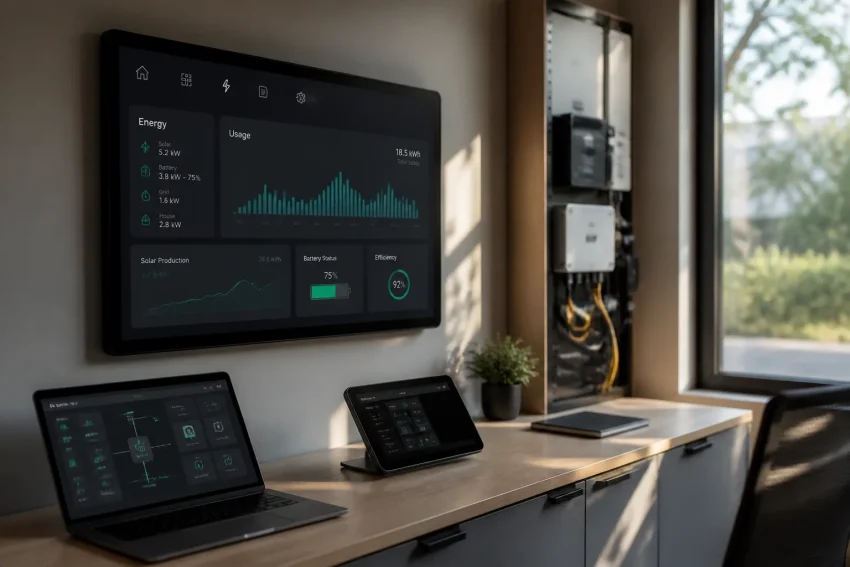
Artificial intelligence no longer lives in science fiction, it’s already reshaping how you work, communicate, and manage your home. From voice assistants that learn your habits to systems like Lifee’s AI-powered automation that optimize energy use in real time, these technologies are quietly becoming essential. But how does AI actually work beneath the surface?
This guide breaks down the core mechanics, machine learning, neural networks, and natural language processing, in plain language, then shows you how businesses and homeowners are applying AI to cut costs, boost efficiency, and build smarter, more sustainable spaces. You’ll walk away understanding both the “what” and the “why.
Introduction to Artificial Intelligence
Defining Artificial Intelligence
Artificial intelligence, or AI, refers to computer systems designed to perform tasks that typically require human capabilities, such as recognizing patterns, making predictions, understanding language, interpreting images, and selecting actions. AI is not one single technology. It includes rule-based systems, machine learning, deep learning, generative AI, robotics, and other methods that allow software or machines to respond to information.
The distinction between ordinary automation and AI is useful but not absolute. Traditional automation follows explicitly defined rules, while machine-learning systems infer patterns from examples and use those patterns to produce an output. A smart thermostat that follows a fixed schedule is automated; a system that learns occupancy, weather, thermal behavior, and energy prices to adjust that schedule is using AI or advanced predictive control.
A Brief History of AI
AI research took shape in the 1950s through work on symbolic reasoning, logic-based programs, and early neural networks. Progress accelerated as computing became cheaper, digital data expanded, and specialized processors made large-scale model training practical. Recent advances in foundation models have added systems that can generate or interpret text, images, audio, and software, although their outputs still require evaluation.
By 2026, AI is embedded in recommendation engines, search tools, fraud detection, medical research, translation, customer service, cybersecurity, and connected buildings. Its rapid expansion has also made energy demand, privacy, reliability, and accountability central parts of the AI conversation.
Why AI Matters Today
AI matters because it turns large volumes of data into predictions or decisions that can be used quickly. In a home or commercial building, that may mean identifying unusual consumption, anticipating a heating demand peak, or coordinating equipment with solar generation. In a business, it may mean summarizing documents, forecasting demand, detecting defects, or helping staff find information.
Adoption is no longer limited to experimental projects. The 2026 Stanford AI Index reports that 88% of surveyed organizations used AI in at least one business function in 2025, compared with 78% in 2024. The same report says 79% regularly used generative AI in at least one business function, up from 71% in 2024. These figures describe surveyed organizations rather than every company worldwide, but they show how quickly AI has moved from pilot programs into normal operations.
- AI imitates specific capabilities, not the whole human mind. A model may classify images, predict energy demand, or generate text extremely well while lacking common sense, consciousness, and independent understanding. Its performance must therefore be judged against the task it was designed to perform.
- AI is already part of ordinary routines. Navigation, spam filtering, voice transcription, personalized recommendations, online fraud checks, and connected-home controls all use forms of artificial intelligence, often without displaying an obvious “AI” label.
- AI adoption creates both value and responsibility. Faster analysis can improve efficiency, but the organization using the system remains responsible for data quality, security, decisions, and the consequences of errors.
How Artificial Intelligence Works: Principles and Technologies
Machine Learning and Deep Learning
Machine learning is a branch of AI in which an algorithm learns relationships from data rather than receiving every rule manually. During training, the system compares examples with expected results and adjusts internal parameters to reduce errors. Once deployed, it uses those learned parameters to make predictions or recommendations on new data.
Deep learning uses neural networks with many computational layers. These models are particularly effective with unstructured information such as images, speech, video, and natural language. A language model, for example, processes sequences of tokens and estimates likely relationships between them, while a vision model identifies patterns in pixels. Neither process is equivalent to human understanding, and confident output can still be inaccurate.
Neural Networks and Data-Driven Decision Making
Neural networks contain interconnected mathematical units whose parameters are adjusted during training. A model may learn that certain combinations of temperature, occupancy, time, and weather conditions are associated with higher energy demand. It can then estimate likely demand and help a control system choose an appropriate response.
A practical AI workflow usually includes more than a model. Data must be collected, cleaned, labeled when necessary, stored securely, and checked for gaps or bias. The trained system must then be tested on data it has not seen, monitored after deployment, and retrained or recalibrated when conditions change. This is important in buildings because a renovation, new appliance, changed occupancy pattern, or faulty sensor can make old assumptions unreliable.
From Data to Action
Most useful AI systems follow a sequence: sensing, processing, inference, action, and feedback. Sensors may report temperature, occupancy, light, air quality, or electricity use. The AI interprets those signals, predicts what may happen next, and sends a recommendation or command to another system. Feedback then shows whether the action achieved the desired result.
| Stage | What happens | Example in energy management |
|---|---|---|
| Sense | Devices collect relevant data. | Temperature, occupancy, weather, and electricity readings are recorded. |
| Learn | The system identifies relationships in historical data. | It learns when a building normally heats up or reaches peak demand. |
| Predict | The model estimates a future condition or outcome. | It forecasts tomorrow’s cooling requirement or an unusual load. |
| Act | A control system applies a decision within defined limits. | Cooling is pre-adjusted, equipment is rescheduled, or an alert is sent. |
| Evaluate | Results are measured against the objective. | Comfort, cost, consumption, and emissions are compared with the target. |
Key Technologies Enabling AI
Modern AI depends on an ecosystem rather than an algorithm alone. Data quality, computing infrastructure, software design, connectivity, and human supervision all affect the final result.
- High-quality data: Accurate, representative data helps a model distinguish meaningful patterns from noise. In a smart building, poorly calibrated sensors or missing occupancy information can lead to unnecessary heating, cooling, or lighting. Data minimization is equally important because collecting information that is not needed increases privacy and security exposure.
- Specialized processors: Graphics processing units and other AI accelerators perform the parallel calculations required by modern models. Efficient hardware can reduce response time and operating cost, while smaller models can sometimes run locally on a device instead of sending every signal to the cloud.
- Cloud and edge computing: Cloud infrastructure provides scalable storage and model processing, while edge computing analyzes data close to where it is produced. A hybrid approach can keep time-sensitive controls working locally while sending less sensitive summaries to centralized systems.
- Algorithms and model design: Different tasks require different methods. Forecasting, anomaly detection, classification, optimization, natural-language processing, and generative AI should not be treated as interchangeable. Choosing the simplest model that meets the performance requirement can improve explainability and reduce resource use.
- Interfaces and control systems: AI creates value only when its output leads to a useful decision. A clear dashboard, an understandable alert, and safe operating limits can matter as much as model accuracy, especially when people need to override or review an automated action.
Artificial intelligence does not have feelings or self-awareness. It calculates outputs from data, learned parameters, instructions, and system constraints. Generative AI can produce fluent and original-looking material, but fluency does not guarantee truth, reasoning, or accountability.
AI Applications in Daily Life: Focus on Home Automation and Energy Efficiency
Smart Home Automation
AI-powered home automation can coordinate lighting, heating, cooling, blinds, appliances, security, and access controls. Instead of applying one schedule to every day, the system can combine routines with occupancy, weather, indoor conditions, and user preferences. A home might reduce heating when it is empty, close blinds during intense sunlight, and restore comfort before residents return.
The best systems preserve user control. Residents should be able to see what the system is doing, change preferences, set limits, and disable automation when necessary. This prevents convenience from becoming frustration and helps expose errors such as a motion sensor that incorrectly reports an occupied room.
Energy Management and Sustainability
AI can forecast consumption, detect abnormal equipment behavior, coordinate flexible loads, and identify opportunities for efficiency improvements. An intelligent energy audit may combine utility records, equipment information, building characteristics, weather data, and occupancy patterns to prioritize practical interventions rather than offering generic advice.
The environmental value of AI depends on the complete system. Better control may reduce a building’s consumption, but AI services also require servers, networks, sensors, and electricity. The International Energy Agency estimates that data centres used about 415 terawatt-hours of electricity in 2024, or approximately 1.5% of global electricity consumption. Its 2026 analysis projects that data-centre electricity use could reach about 945 terawatt-hours by 2030, with AI-optimized facilities among the fastest-growing sources of demand.
This makes efficiency a two-sided responsibility: AI should help users reduce avoidable energy use while providers improve model efficiency, hardware utilization, cooling, and the use of lower-carbon electricity. For households and businesses, measuring actual consumption before and after deployment is more reliable than assuming that any “smart” feature automatically saves energy.
Lifee’s Proprietary AI Solutions
Lifee is a French company specializing in intelligent solutions for energy efficiency, home automation, and cybersecurity. Its approach combines sustainable innovation, intuitive automation, and technology designed to serve people in homes, businesses, and real-estate projects.
- Contextual automation: Lifee can design systems that use behavior, occupancy, schedules, and environmental conditions to adapt connected devices. The practical goal is to reduce repetitive manual adjustments while keeping comfort preferences and user-defined limits at the center of the experience.
- Predictive energy management: AI-based forecasting can help anticipate demand and coordinate heating, cooling, lighting, storage, or other flexible loads. This makes it possible to address waste before it appears and to align operation more closely with energy prices, renewable generation, or grid conditions.
- Custom project design: A retrofit apartment, a new house, an office, and a large property do not have the same constraints. Lifee’s custom approach can connect the technical design to the building’s use, existing equipment, budget, energy goals, and future expansion plans.
- Cybersecurity and privacy: Connected energy and automation systems need secure access, protected communications, software maintenance, and clear data practices. Lifee’s project focus includes cybersecurity because an efficient system must also protect residents, operators, and the building infrastructure.
For a homeowner, the result may be a more comfortable home with fewer wasted operating hours. For a business or real-estate professional, the value may include better visibility into performance, earlier maintenance signals, lower operating costs, and a clearer path toward sustainability targets. These outcomes should be validated with agreed metrics rather than assumed from the presence of AI alone.
| Objective | Useful AI capability | Metric to monitor |
|---|---|---|
| Reduce energy waste | Occupancy-based control and anomaly detection | Energy use per square metre and vacant-period consumption |
| Maintain comfort | Predictive heating and cooling adjustments | Temperature deviation, complaints, and override frequency |
| Lower operating costs | Load forecasting and scheduling | Utility cost, peak demand, and flexible-load performance |
| Protect connected systems | Access controls, monitoring, and secure updates | Security incidents, patch status, and authorized-device inventory |
Benefits and Challenges of Artificial Intelligence
Key Benefits of AI
AI can create measurable value when its objective is clear, its data is appropriate, and its performance is monitored. The most useful benefits are practical rather than abstract.
- Process automation: AI can classify requests, summarize information, detect anomalies, or coordinate routine controls. This reduces repetitive work and allows people to focus on decisions that require judgment, but automated actions should have permissions, thresholds, and an escalation path.
- Energy savings: Predictive control can identify when equipment is likely to run unnecessarily or when a building is approaching a demand peak. Savings should be measured against a credible baseline while accounting for weather, occupancy, operating hours, and changes to the building.
- Personalization: Systems can adapt settings to individual routines and preferences instead of imposing one standard schedule. Personalization works best when residents can inspect, correct, and delete the information used to create those preferences.
- Operational efficiency: AI can examine more variables and respond faster than manual analysis. Businesses can use it to prioritize maintenance, forecast demand, and identify process bottlenecks, while retaining human review for high-impact or uncertain decisions.
- Accessibility and assistance: Speech interfaces, automatic transcription, translation, image description, and adaptive controls can make digital and physical environments easier to use. Inclusive testing is necessary because systems may perform differently across languages, accents, disabilities, and demographic groups.
Challenges and Ethical Considerations
AI systems introduce risks that cannot be solved by model accuracy alone. The surrounding product, data pipeline, contract, security architecture, and human process all influence safety.
- Data privacy: Smart-home information can reveal occupancy, routines, health-related conditions, or household behavior. Providers should explain what is collected, why it is needed, where it is processed, how long it is retained, and how users can access or delete it.
- Fairness and bias: A model trained on incomplete or unrepresentative data may perform poorly for particular groups or environments. Testing should examine relevant subgroups and real operating conditions, with a process for reporting and correcting harmful outcomes.
- Security: Connected devices create additional entry points for attackers. Strong authentication, least-privilege access, encryption, secure update processes, network segmentation, and an inventory of connected devices are practical safeguards for AI-enabled buildings.
- Transparency and reliability: Users need to know when AI is involved, what information influenced an action, and how to challenge or override it. Confidence scores, explanations, logs, and clear fallback behavior can make systems easier to supervise.
- Environmental cost: Training and running AI models consumes electricity and may require substantial hardware and cooling infrastructure. Efficient models, local processing where appropriate, demand management, renewable electricity, and lifecycle planning can reduce the footprint.
Balancing Innovation with Responsibility
Responsible adoption begins with a defined use case and a risk assessment. A homeowner may prioritize privacy and simple override controls, while a property manager may also need tenant communication, access governance, maintenance procedures, and evidence that the system meets building objectives.
In the European Union, the AI Act entered into force in 2024 and applies through a phased schedule. Prohibitions on certain AI practices and AI-literacy obligations began applying in February 2025, obligations for general-purpose AI models and governance rules began in August 2025, and broader provisions became applicable in August 2026, subject to specific exceptions and timelines. Organizations operating in or serving the EU should verify which requirements apply to their particular system and role.
For Lifee projects, responsible implementation means treating cybersecurity, data protection, human oversight, and measurable energy performance as part of the design rather than as afterthoughts. A system that cannot explain its purpose, protect access, or demonstrate results is not ready for unsupervised deployment.
Making AI Useful: From Pilot Project to Measurable Results
Start with a Specific Operational Problem
Successful AI projects usually begin with a measurable problem rather than a desire to “add AI.” Examples include excessive overnight consumption, repeated comfort complaints, unexpected equipment failures, or the time required to review utility data. A narrow objective makes it easier to select the right data and decide whether the system has delivered value.
Establish a Baseline and Success Metrics
Record current performance before changing the system. Useful metrics may include energy use, peak demand, operating cost, comfort variation, maintenance response time, user overrides, and security events. Comparing these measures over time helps distinguish genuine improvement from changes caused by weather, occupancy, tariffs, or business activity.
Use Human Oversight and Safe Defaults
Begin with recommendations or limited automation when the consequences of an error are significant. Define temperature ranges, maximum operating times, fallback schedules, manual overrides, and escalation rules. As confidence grows, selected actions can be automated more fully while logs and periodic reviews remain in place.
Plan for Maintenance and Model Drift
AI performance can deteriorate when the environment changes. New equipment, altered working hours, renovations, sensor failures, and unusual weather can all make historical patterns less reliable. A maintenance plan should include sensor checks, software and security updates, performance reviews, retraining or recalibration, and a process for investigating unexpected behavior.
Measure the Complete System
A lower energy bill alone may not prove that an AI system is effective if comfort has declined or operating hours have changed. Lifee can help connect automation design with energy, comfort, security, and sustainability objectives so that individuals, businesses, and real-estate professionals can evaluate the whole outcome rather than a single headline metric.
The Future of AI: Intelligent Automation and Technology Serving Humanity
Ongoing Evolution of AI
AI is moving toward systems that combine language, vision, sensor data, software tools, and physical controls. These multimodal and agentic systems may be able to interpret a request, retrieve information, plan a sequence, and ask for approval before taking action. Their usefulness will depend on reliable permissions, accurate context, and the ability to stop safely when information is incomplete.
AI for Sustainable and Human-Centric Living
The energy relationship is becoming increasingly important. The IEA reports that a typical AI-focused data centre can consume as much electricity as approximately 100,000 households, while the largest facilities under construction may consume many times more. At the same time, AI can help forecast renewable generation, manage flexible demand, detect grid faults, and improve building efficiency.
This creates a clear design challenge: AI should not be promoted as sustainable simply because it optimizes one device. Its benefits should be assessed across the full lifecycle, including data collection, computing, equipment, maintenance, electricity use, and end-of-life impacts. Intelligent energy management from companies such as Lifee can contribute to this balance by applying AI where better coordination produces a measurable reduction in waste.
Exploring AI Solutions for Smarter Living
Individuals, businesses, and real-estate professionals can prepare by choosing interoperable systems, requesting clear data policies, and setting measurable performance targets. They should also consider whether processing can occur locally, how long data is retained, how devices receive security updates, and what happens if an internet connection or AI service fails.
Lifee’s focus on custom energy-efficiency solutions, intelligent automation, and cybersecurity is relevant to this transition because each building has different technical and human requirements. A tailored project can connect automation to actual comfort, cost, sustainability, and security priorities instead of treating AI as a standalone feature.
- Human control will remain essential. Automation should reduce routine effort without removing the ability to understand, correct, or stop an important action.
- Efficiency will be judged by outcomes. The most valuable systems will show improvements in energy, cost, comfort, reliability, accessibility, or safety through transparent measurement.
- Trust will become a competitive requirement. Privacy protection, cybersecurity, explainability, responsible data use, and compliance will influence whether people accept AI in homes and workplaces.
Frequently Asked Questions About Artificial Intelligence
Is artificial intelligence the same as machine learning?
No. Artificial intelligence is the broader field of systems that perform tasks associated with human capabilities. Machine learning is one method within AI that uses data to learn patterns and make predictions or decisions.
Can AI think or understand like a human?
Current AI systems can process information and produce highly capable outputs, but they do not possess human consciousness, feelings, or self-awareness. Their apparent understanding is generated from learned patterns, instructions, and the data available to them.
Does AI always reduce energy consumption?
No. AI can reduce energy use through forecasting, anomaly detection, and adaptive control, but the result depends on system design and actual operation. Computing infrastructure also consumes energy, so performance should be measured across the complete system.
Is AI-powered home automation secure?
It can be secure when it uses strong authentication, protected communications, controlled permissions, reliable updates, network safeguards, and clear data practices. Security is not guaranteed by the presence of AI, so homeowners and organizations should assess the provider and the complete connected system.
How should a business begin using AI?
Start with a defined, measurable problem and a small controlled deployment. Establish a baseline, assess privacy and security risks, keep a human reviewer involved, and expand only after the system demonstrates reliable results under real operating conditions.
Artificial intelligence is best understood as a set of methods that transform data into predictions, generated content, recommendations, or controlled actions. Its value depends not only on model capability but also on data quality, secure implementation, human oversight, and measurable outcomes. In homes and businesses, Lifee’s AI-powered automation and custom energy-efficiency solutions show how intelligent technology can be connected to comfort, sustainability, operational performance, and cybersecurity. When these priorities are designed together, AI becomes a practical tool for smarter and more responsible living.